


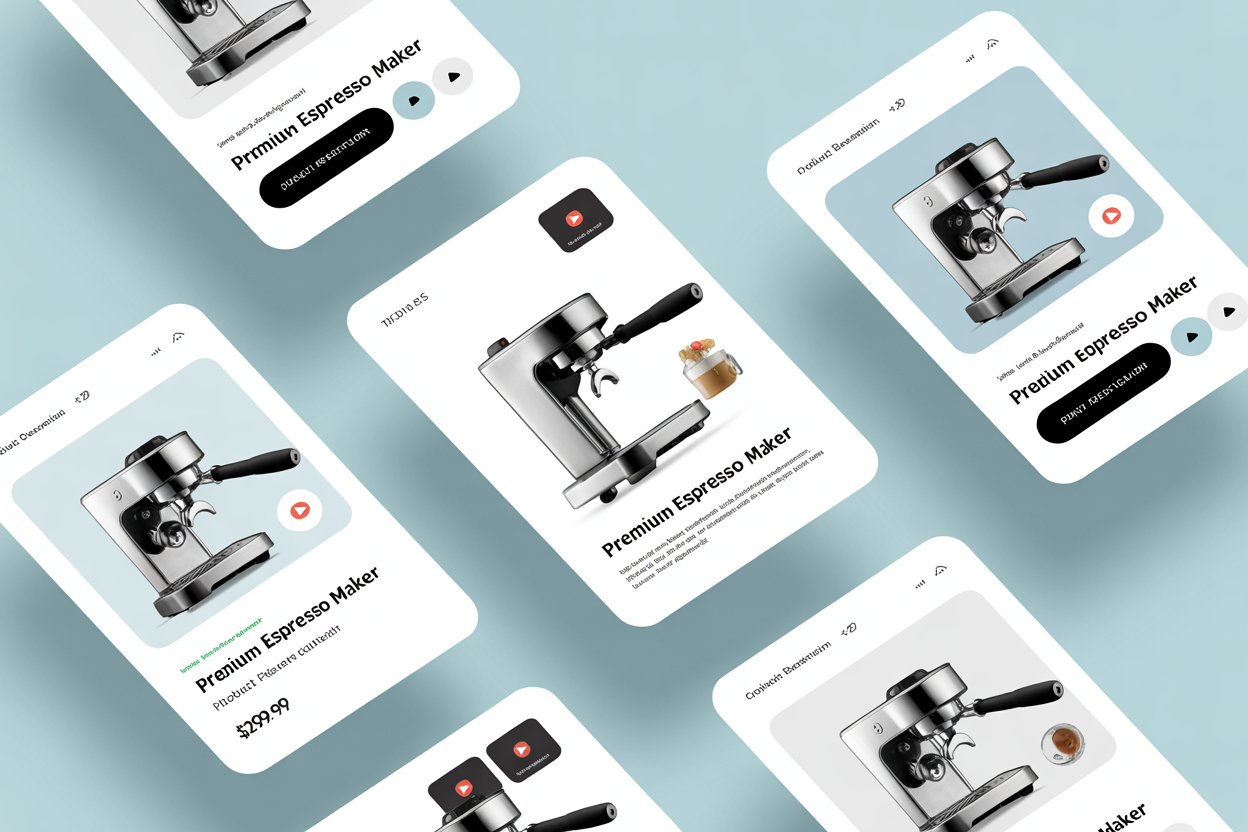
Product content management is the process of collecting, enriching, and distributing all customer-facing product information across sales channels. Unlike ERP systems, which track basic data like price, stock, and SKUs, product content management ensures customers understand and see the value of each product through descriptions, images, features, and other media.
Systems That Enable Product Content Management
-
Product Information Management (PIM) - organizes structured product data.
-
Digital Asset Management (DAM) - stores and manages images, videos, and 3D models.
-
Content Management System (CMS) - presents product data and media on websites or apps.
-
E-Commerce Platforms - display products, manage inventory, and handle transactions.
If your team spends over five hours a week reformatting products, faces frequent updates or regulatory requirements, or manages more than 500 SKUs, manual content management becomes a problem.
Read the full article to learn more about current product content management trends, best practices, the use of dedicated systems, and other key insights.
What is Product Content Management (PCM)?
Product Content Management (PCM) is the business process of aggregating, enriching, and distributing customer-facing product content across all sales channels.
While a database (like an ERP) records the basic facts about a product: its SKU, price, inventory levels, and other operational details, Product Content Management (enabled by other systems described below) goes further by managing all the content a customer sees, including descriptions, images, features, benefits, and instructions. In other words, ERP tells you a product exists, but Product Content Management tells the customer why it matters and helps them understand, compare, and choose it.
By 2026, Product Content Management transforms raw technical data, like SKUs, dimensions, and material lists, into persuasive content that engages customers. This includes lifestyle images, 3D models, and sustainability stories. Product Content Management connects the technical details needed for logistics with the creative storytelling that helps increase sales on platforms like Amazon, TikTok Shop, or premium headless storefronts.
The Software Stack: PIM, DAM, CMS, and E-Commerce
In 2026, businesses that want to manage product content more effectively run into countless software abbreviations and get confused about which of those they actually need. We will help you get a clear picture of what certain systems do and how each one can help you manage product content.
Feature Comparison & Synergy
| System | Primary Focus | Key Data Types | Best For... |
|---|---|---|---|
| PIM | Structured Data | SKUs, weights, technical specs. | Managing a technical "Single Source of Truth." |
| DAM | Unstructured Media | 8K Video, 3D AR models, PDFs. | Brand consistency and visual version control. |
| CMS | Web Presentation | Blog posts, site layout, UI. | Controlling the "look and feel" of your store. |
| E-Commerce Platform | Transactions | Cart logic, payments, inventory. | Converting visitors into paying customers. |
PIM system (Product Information Management system) stores and organizes structured product data, such as SKUs, weights, and specifications, ensuring technical details are accurate and consistent across all channels.
DAM (Digital Asset Management) manages media assets like images, videos, and 3D models, making it easy to link the correct media to products.
CMS (Content Management System) takes product data and media from PIM and DAM and presents it on websites or digital storefronts. For example, the CMS formats the product description, images, and features into a page layout optimized for the company website or mobile app.
E-Commerce Platforms use the combined product content to display products, manage inventory, and handle transactions.
AI Note: In 2026, 19% of these systems now feature "Agentic AI" that automatically flags data gaps and suggests media tags before a human even opens the file (Business Research Insights, 2026).
Do You Need a Dedicated Software to Manage Product Content?
There is a specific breaking point where manual content management becomes a problem. The first sign is usually Platform Fragmentation. If your team spends more than five hours a week manually reformatting the same product description for different marketplaces, your overhead is eating your margin.
The second sign is Frequent Catalog Volatility. If your specifications change seasonally or you have to follow complex international regulations, like the EU’s mandatory Digital Product Passport (DPP) for textiles and batteries, manual updates pose a legal risk.
Finally, the 500-SKU Threshold is the typical tipping point. Once you exceed this volume, the spreadsheet-and-folder method creates data debt that slows your time to market by weeks. This delay gives faster competitors the chance to take the lead.
Best Practices for Product Content Management
1. Establish Clear Content Governance
Define specific roles for contributors, editors, and approvers. Use validation rules to ensure consistency. For example, set a rule that no product can go live without a unique title, three high-resolution images, and a completed "Repairability Score" for EU legislation compliance.
2. Centralize in a "Single Source of Truth" (SSoT)
Consolidate all descriptions and media into a central PIM/DAM system. Avoid "Spreadsheet Hell" and siloed desktop folders. Maintain one canonical product record per SKU that links to all its localization variants.
3. Standardize Metadata and Taxonomies
Define attribute sets for each product category (for example, use "Fabric" for apparel and "Voltage" for electronics). Use controlled vocabularies to make sure similar terms aren’t used inconsistently (for example, "Midnight Blue" and "Navy" for a color) because inconsistencies can break search filters and confuse customers.
4. Integrate Workflows and Approvals
Build automated review cycles. If the marketing team changes a product claim, the system should automatically notify the legal or compliance team for a "digital sign-off" before the update pushes to the live site.
5. Localize and Adapt for Context
Plan for more than just translating language. Content should change for regional measurements, such as Metric versus Imperial, and local legal disclosures. Connect these localized versions to the master record so that important spec updates, like weight, flow down automatically.
6. Optimize for Channels and Formats
Tailor content for each destination. Use channel templates that automatically map your master data to the specific character counts of Amazon bullets or the aspect ratios of Instagram shopping tags.
7. Track and Improve Performance
Monitor conversion rates and return data. If a product has high traffic but high returns, it’s a signal that the content (images or descriptions) is misleading or lacks detail. Use these insights to bridge "content gaps" in real-time.
8. Ensure Scalability and Collaboration
As you grow, use role-based permissions to protect data integrity. Ensure that while the creative team can upload new photos, only the product owner can change the technical dimensions or safety warnings.
The Main Product Content Management Trends
1. AI-Driven Generation & Enrichment
Over the last couple of years, generative AI has moved from "playing with prompts" to enterprise-scale automation. AI assistants now draft descriptions, generate SEO-friendly titles, and suggest missing attribute values by "reading" technical spec sheets (Inriver, 2026). Over the next few years, generative AI is expected to advance PCM toward fully automated content enrichment, quality checks, and channel-specific optimization. For now, however, it still relies heavily on human supervision, and the extent of possible AI automation remains a highly debated topic.
2. Headless Architectures & API-First Delivery
The "headless" approach separates the back-end, where product data is stored, from the front-end, where it is displayed. This makes it possible for the same product record to be used across multiple channels at the same time, such as a website, mobile app, AR headset, or in-store kiosk, with updates delivered instantly through high-speed APIs (BigCommerce, 2026).
3. Personalized and Dynamic Experiences
Product Content Management is becoming "context-aware" so that the content a customer sees can be adjusted based on real-time data, such as customer location, weather, device type, browsing behavior, etc. For example, a customer in a rainy city might see a "waterproof" benefit, while someone in a warmer climate sees "breathable" features (Airtable, 2026).
4. Semantic & Structured Data
E-commerce and retail brands are increasingly adopting Schema.org and JSON-LD to structure their product information on web pages. Schema.org provides a standard vocabulary for marking up details like price, availability, and features, while JSON-LD is a format for embedding that data in the page’s code. This ensures products aren’t just visible to people, but are also correctly indexed and understood by search engines, AI assistants, and other automated systems.
5. Embedded Quality and Compliance Checks
With the rise of the EU Digital Product Passport (DPP), the EU-oriented businesses now include automated compliance checks in their product content management. Systems such as product information management, product experience management, or digital asset management platforms can provide real-time alerts if required sustainability disclosures, recycling instructions, or other regulatory information are missing.
6. Real-Time System Integration
The delay between changes in an ERP system, such as price or stock updates, and updates to product content is becoming minimal. Real-time synchronization ensures that information like "Out of Stock" status is updated instantly across all of your sales channels.
7. Quality Scoring and Predictive Insights
Some systems now provide a "Content Health Score," similar to a credit score, to measure the quality and effectiveness of product content. For example, the system might indicate that adding a 360-degree product video could increase conversion rates by 12%.