
API Definition
An Application Programming Interface (API) is a connection point that allows two software systems to share data and trigger actions automatically, without manual exports, file transfers, or human go-betweens.
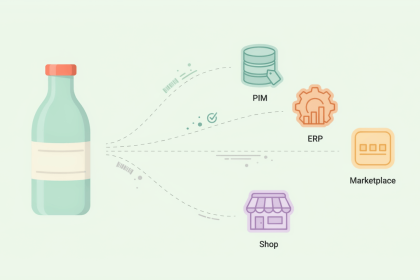
The term comes up constantly in ecommerce and system integration because modern business software (ERP, PIM, ecommerce platforms, marketplaces) rarely works in isolation. APIs are what allow these systems to talk to each other in real time.
How does an API work?
One system sends a request, asking for data or instructing something to happen. The other receives it and sends back a response. The exchange happens automatically, in the background.
A practical example: when a price changes in an ERP and that update appears on an ecommerce storefront minutes later, an API made it happen. No file export, no manual re-entry.
Why does this matter for ecommerce and system integration?
Without APIs, keeping data consistent across systems means manual work, slow, error-prone, and hard to scale. With APIs, integrations run continuously: an ERP pushes stock levels to a storefront, a PIM distributes product content to multiple channels, an OMS sends confirmed orders back to the ERP for fulfillment. Each of these is a live, automated connection between two systems.
What does "API-first" mean?
When a vendor describes their platform as API-first, it means the system was built to connect with other tools from the ground up, rather than treating integration as an afterthought. In practice, it signals that connecting to an ERP, a PIM, or a storefront will require less custom development work.