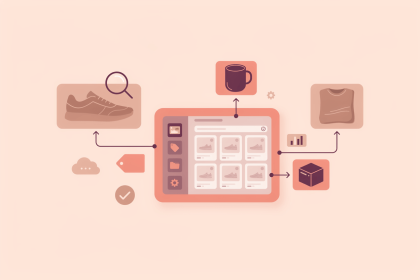

Taxonomy Definition
Taxonomy is a structured system for classifying and organising information into named categories and subcategories based on shared characteristics or relationships. In everyday product and content management, taxonomy refers to the deliberate hierarchy or grouping system used to organize items so they can be found, filtered, and understood.
What does a taxonomy look like in practice?
A taxonomy is usually a tree-like structure: a broad parent category branches into narrower child categories, which may branch further still. A consumer electronics distributor might structure their taxonomy like this:
- Computers → Laptops → Gaming Laptops
- Computers → Laptops → Ultrabooks
- Phones → Smartphones → Android Phones
Why does taxonomy matter?
A well-designed taxonomy affects nearly every system that stores or surfaces information:
- Navigation and search: visitors can browse a site by category and search results can be scoped or filtered by taxonomy terms
- Consistency: items are grouped by agreed rules, not individual guesswork, so the same type of thing always ends up in the same place
- Reporting and analysis: sales, inventory, or content performance can be measured at any level of the hierarchy (e.g., all Tops, or just Graphic Tees)
- System integration : when two platforms share a taxonomy, products or content can move between them without manual reclassification
Who creates and manages a taxonomy?
In smaller organisations, a taxonomy is often created informally by whoever sets up the catalogue or CMS. In larger organizations, taxonomy management is sometimes owned by a dedicated content strategist, an information architect, or a data governance team. Systems that centralise product data, such as a PIM, include taxonomy management tools to ensure the hierarchy stays consistent across channels.
When does a taxonomy need to change?
Taxonomies are not set-and-forget. They need revisiting when the business adds new product lines or content types that don't fit existing categories, when customer behaviour shows people looking for things in unexpected places, or when two systems with different taxonomies need to be merged. Restructuring a taxonomy that underpins a large catalogue is significant work, which is why getting the initial structure right (broad enough to grow, specific enough to be useful) matters early.