


NetSuite serves over 43,000 customers globally and supports 27 languages. It handles financials, inventory, orders, and supply chain well. What it was not built for is managing rich product content at scale. Product descriptions, technical attributes, digital assets, channel-specific variants, and localized content quickly overwhelm what NetSuite's item records were designed to hold.
Most NetSuite users discover this the same way: product managers maintain a growing spreadsheet alongside NetSuite, manually copying data between systems as new SKUs are added or specifications change. Errors accumulate, publishing is delayed, and no one is fully confident the data in NetSuite matches what went to the webshop. A PIM system fixes this by acting as the master repository for product content, with an integration keeping the two in sync. The question is which PIM to use and how that integration actually works.
Key takeaways
- Most PIMs connect to NetSuite via third-party middleware like Celigo or Alumio. Native integrations are rare.
- Middleware adds a separate subscription, typically $12,800 to $25,500 per year for a mid-sized company, plus implementation and ongoing maintenance costs.
- Bidirectional sync matters only if your PIM team manages fields that NetSuite also needs. For most teams, one-way from NetSuite to PIM is sufficient.
- AtroPIM is the only platform in this comparison with a native NetSuite connector. It also supports order data flowing back into NetSuite from connected e-commerce systems, removing the need for a direct ERP-to-storefront integration.
- Data model flexibility is a harder constraint than integration type. A PIM that cannot model your product structure correctly will cause problems regardless of how the sync works.
What a PIM NetSuite integration actually does
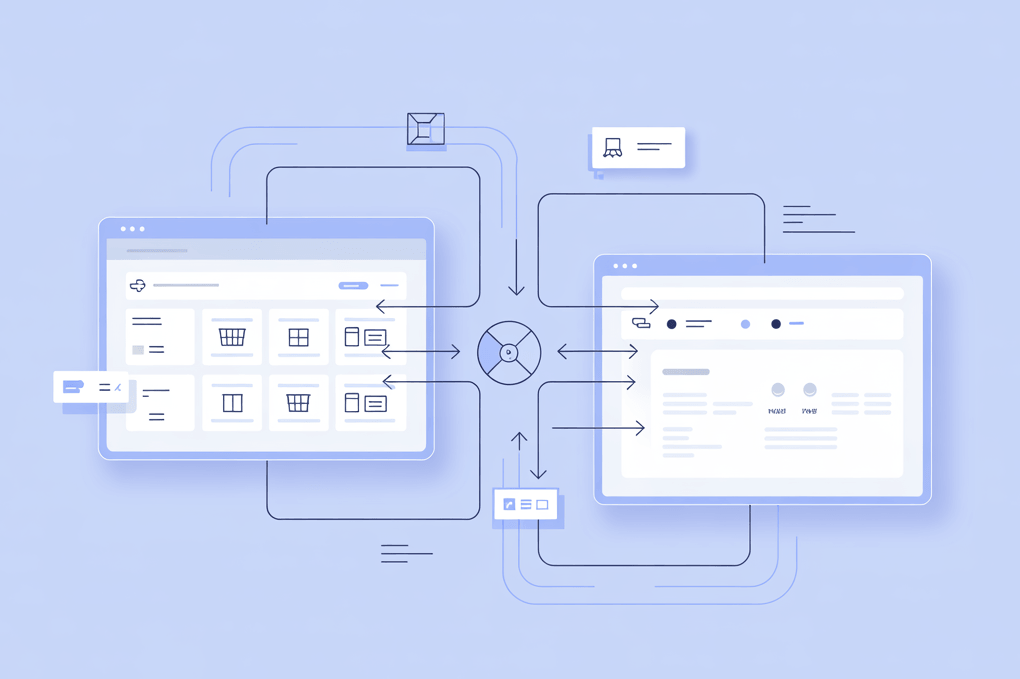
The most common flow: product records are created or updated in NetSuite (item numbers, base attributes, pricing), then synced to the PIM, where teams enrich them with descriptions, images, technical specs, and channel-specific content. The enriched data then flows to downstream systems like e-commerce platforms, print catalogs, or marketplaces.
A bidirectional integration adds a return path: updates made in the PIM that affect ERP-relevant fields, such as GTIN codes, base unit of measure, or supplier references, write back to NetSuite without manual reconciliation. For most teams, one-way from NetSuite to PIM is sufficient. Bidirectional sync only matters if the PIM team manages fields that NetSuite also needs to reflect.
Whether the integration is native to the PIM or requires a third-party middleware platform like Celigo, Alumio, or Patchworks matters just as much as sync direction. A native integration is configured inside the PIM itself. A middleware-based integration adds a third system to maintain, a separate subscription, and an additional point of failure. Most PIM platforms connect to NetSuite via middleware. Native integrations are rare.
Some companies also need the PIM to act as a broader integration hub, managing the full data flow from ERP through enrichment to publishing, so that NetSuite and the e-commerce layer are never connected directly. Not every PIM supports this architecture.
What to evaluate before choosing
Integration type. Native or middleware? Understand what that means in terms of setup time, maintenance cost, and who owns troubleshooting when sync breaks.
Sync direction. Bidirectional or one-way? Check whether write-back is supported if your PIM team manages fields NetSuite also needs.
Data model flexibility. Configurable items, product families, variants by multiple attributes, and category-specific spec tables require a PIM with flexible attribute sets and custom data structures per product type. A rigid data model will constrain what you can do regardless of integration quality.
DAM included or separate. Some platforms bundle digital asset management. Others don't. If you manage significant image volumes, this affects total cost.
Deployment. NetSuite is cloud-only. Your PIM doesn't have to be. On-premise makes sense when data residency requirements or customization depth outweigh SaaS convenience.
Total cost of ownership. The PIM license is only part of it. A Celigo subscription runs $12,800 to $25,500 annually for a mid-sized company, plus implementation and maintenance. A higher-priced PIM with a native integration can cost less over three years than a cheaper one running through that additional layer.
PIM NetSuite platform comparison
AtroPIM
AtroPIM is built on the AtroCore platform and ships a native NetSuite integration. The connector is available as a module from the AtroCore store and supports both one-way and two-way data synchronization. Sync can be configured per data feed and scheduled independently, so product items can sync on a different schedule from images or pricing.
In projects we have implemented for manufacturers in industrial equipment and building materials, the typical setup is: NetSuite pushes item numbers, categories, base units, and pricing to AtroPIM, the product team enriches with technical specs, images, and channel-specific descriptions, and the PIM then publishes to e-commerce (Shopify, Magento, Shopware) and generates PDF product sheets and catalogs directly. NetSuite and the e-commerce layer are not connected directly at all. AtroPIM acts as the integration hub.
The integration goes further than product data. Because AtroCore functions as a full data integration platform, it can synchronize customer orders from connected systems back into NetSuite for fulfillment and financial processing, without any direct webshop-to-ERP connection. This makes AtroPIM viable for complex architectures where multiple external systems exchange data through a single managed layer rather than point-to-point connections.
The data model is 100% configurable. Attribute sets, product families, complex variant structures, and custom relationships are all defined without code. The built-in DAM, part of the AtroCore platform, handles images and documents natively with no separate subscription.
AtroPIM is open source and can be deployed on-premise or as SaaS. The core PIM is free. Modules including the NetSuite connector are paid add-ons, which makes it realistic to start small and expand without committing to enterprise-level pricing upfront. The platform is built for mid-sized and large companies with complex product catalogs. It requires implementation effort and is not the fastest option for simple use cases.
Akeneo
Akeneo has a strong open source Community Edition alongside commercial Growth and Enterprise tiers. Its data model handles complex catalogs with many variants and attribute families well. Connecting to NetSuite requires middleware. Celigo is the most commonly used connector and has over 80 prebuilt integration apps for NetSuite. Flow configuration, error handling, and maintenance all happen in Celigo, not Akeneo. In practice, this means three systems to maintain instead of two. When a sync error occurs, the first question is always which system owns it. Akeneo does not include native DAM. Worth considering for companies with in-house technical teams, complex data models, and an existing Celigo investment to extend.
Pimcore
Pimcore combines PIM, DAM, MDM, and CMS in a single open source platform. NetSuite integration is available via Alumio or custom connectors using Pimcore's REST API, which means the integration design and maintenance is a development project, not a configuration task. For a manufacturer with a large catalog, the pattern is: NetSuite manages items and pricing, Pimcore holds the full data model and assets, custom integration logic handles field mapping. This works when the team has developers to own it. When they don't, the maintenance burden accumulates. Worth considering for enterprises with dedicated development teams who need a platform beyond just PIM.
Pimberly
Pimberly is a cloud-only SaaS PIM for mid-market distributors and retailers with a documented integration path to NetSuite via Alumio or Patchworks. For a distributor syncing a few thousand SKUs from NetSuite into Pimberly and pushing to a single storefront, the middleware setup is manageable. Where it shows limits is with complex catalog structures: category-specific attribute sets, technical spec tables that differ by product type, or multi-level variant hierarchies will push against what the data model can handle. DAM capabilities are limited. Worth considering for mid-market operations with relatively uniform catalog structures.
Salsify
Salsify is a Product Experience Management (PXM) platform whose strength is channel syndication to retailer portals, digital shelf networks, and major marketplaces. NetSuite integration runs via Celigo. Pricing is not public and is generally the highest in this comparison. For manufacturers or B2B operators selling through their own e-commerce channel, the syndication focus may be more than the use case requires. Worth considering for enterprise consumer brands with large retail channel footprints.
inRiver
inRiver is a SaaS PIM for manufacturers managing complex product hierarchies. Its Elastic Data Model is built for structured catalogs. NetSuite integration runs via partner connectors or standard iPaaS tools. No native NetSuite connector is listed in inRiver's marketplace. DAM is not included. Pricing is at the enterprise end. Worth considering for manufacturers with highly structured catalogs already operating in an enterprise tooling context.
DCKAP PIM
DCKAP PIM is built for distributors and comes from the same vendor as the DCKAP Integrator iPaaS platform. The practical advantage is a single support relationship: when something breaks, there is one vendor to contact rather than two. The platform suits standard catalog structures with consistent attributes and limited variant complexity. It is not built for category-specific attribute modeling. Worth considering for distributors already in the DCKAP ecosystem.
Comparison table
| Platform | NetSuite integration | Sync direction | Deployment | DAM included | Open source | Best fit |
|---|---|---|---|---|---|---|
| AtroPIM | Native | Bidirectional | On-premise / SaaS | Yes (built-in) | Yes | Manufacturers, B2B, complex catalogs |
| Akeneo | Via middleware (Celigo) | Bidirectional (via iPaaS) | Cloud / On-premise | Separate module | Yes (Community) | Technical teams, large catalogs |
| Pimcore | Via middleware (Alumio / custom) | Bidirectional (via iPaaS) | On-premise / Cloud | Yes (built-in) | Yes | Dev-heavy, broad data management needs |
| Pimberly | Via middleware (Alumio / Patchworks) | Configurable via iPaaS | SaaS only | Limited | No | Mid-market distributors, retailers |
| Salsify | Via middleware (Celigo) | Configurable via iPaaS | SaaS only | Yes | No | Enterprise brands, retail channel syndication |
| inRiver | Via partner connector / iPaaS | Configurable via iPaaS | SaaS only | No | No | Manufacturers, structured product hierarchies |
| DCKAP PIM | Via DCKAP Integrator (iPaaS) | Bidirectional (via iPaaS) | SaaS | Limited | No | Distributors in DCKAP ecosystem |
How to match the platform to your situation
The integration type is often the deciding factor before platform features come into discussion.
If your team cannot take on a middleware subscription and the overhead of maintaining a connector in a third system, AtroPIM's native integration is worth prioritizing. Setup is self-contained, and bidirectional sync configuration happens inside the PIM.
If you already use Celigo for other NetSuite integrations, adding Akeneo or Salsify to that layer has lower marginal cost. The connector exists, your team knows the platform, and the incremental setup is manageable.
For manufacturers with complex product structures and a development team, Pimcore gives the most flexibility. The NetSuite connector requires custom work or Alumio, but Pimcore's data model and API coverage can handle almost any product data architecture.
For distributors without deep technical resources, Pimberly or DCKAP PIM offer more accessible setups. Both carry middleware dependencies, but the implementations are more standardized.
When evaluating total cost of ownership rather than license cost alone, add the middleware subscription, implementation services, and an estimate of ongoing maintenance. Celigo subscriptions for mid-sized companies typically run $12,800 to $25,500 per year. For many operations, a PIM with a native integration costs less over three years than a cheaper PIM running through that additional layer.
If you are a manufacturer or B2B operator running complex catalogs on NetSuite and want to avoid a middleware dependency, the choice narrows quickly. If you are in retail or distribution with simpler catalog structures and existing iPaaS tooling, the field is broader. Either way, the integration architecture should be the first filter, not the last.