


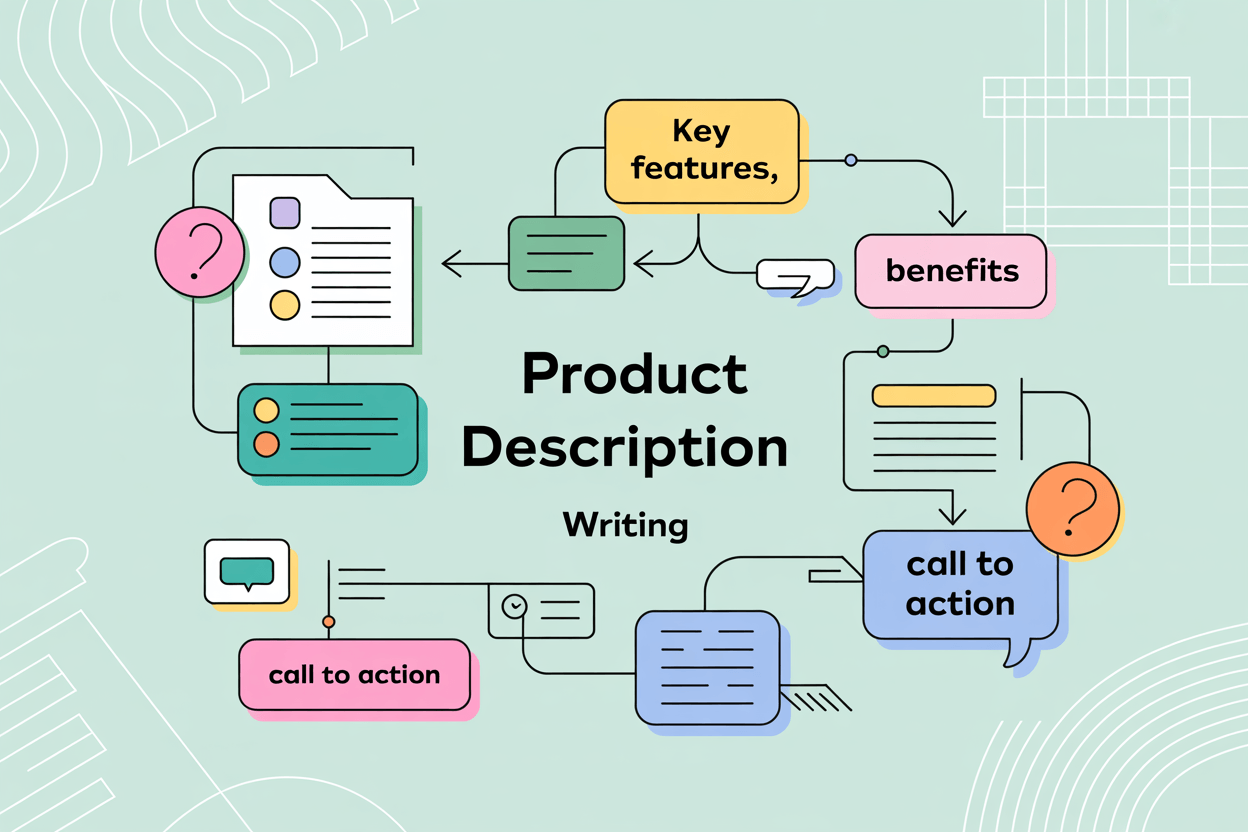
A product description is the copy on a product page that explains what the item is and why someone should buy it. Done well, it converts browsers into buyers. Done badly, it loses sales to a competitor whose page answered the question yours didn't.
Most product descriptions fail not because they're poorly written, but because they're written for nobody in particular. They list features, maybe add an adjective or two, and stop there. The result is a page that looks complete but doesn't sell.
The 21 principles below apply equally to consumer e-commerce and B2B catalogs, though the emphasis shifts depending on the audience.
What makes a product description effective
Before writing a single word, it helps to understand what a high-converting product description actually does. It communicates value, not just information. It speaks to one specific buyer, not a broad audience. And it removes enough doubt that the person reading it feels ready to buy.
The best product description writing examples share three traits: they lead with a benefit the buyer actually cares about, they use specific details instead of vague claims, and they're structured so the key information surfaces quickly. Everything else, tone, length, format, storytelling, follows from those three things.
1. Write unique product description content
Most online stores copy manufacturer texts verbatim. That creates two problems: customers see the same description everywhere, and search engines treat duplicate content as low-quality. Neither is good for conversion rates or search rankings.
You don't have to rewrite every description from scratch. Take the manufacturer text as a base, then expand it with your angle: use cases, customer context, or product comparisons. Even a modest rewrite beats a copy-paste job.
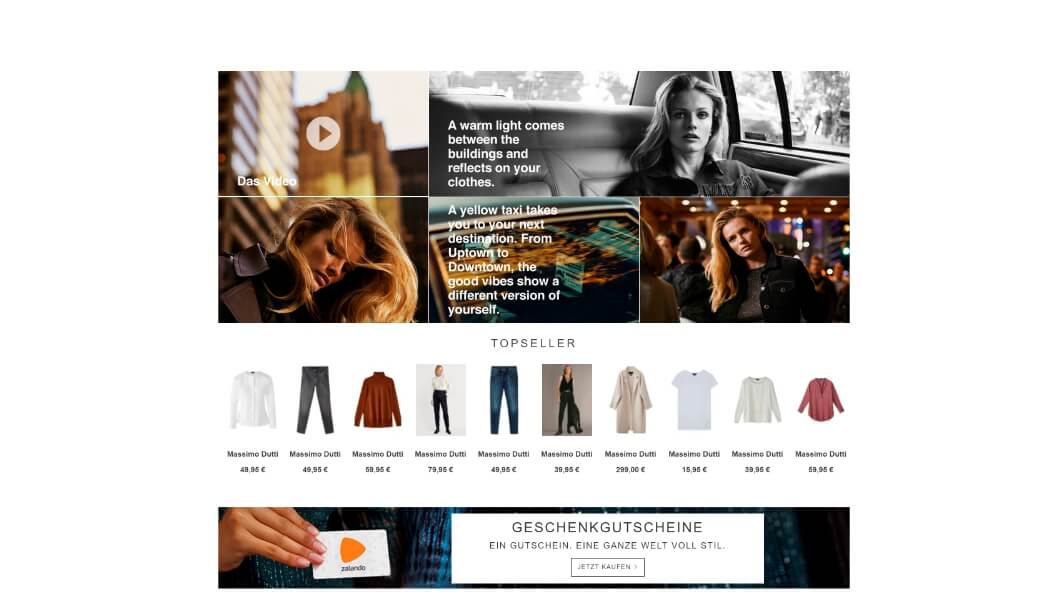
Example: Massimo Dutti product descriptions use distinct editorial voice and lifestyle framing rather than generic garment specs.
If you've outsourced description writing, spot-check a sample. Check for originality, not just grammar.
2. Lead with user benefits, not attributes
Customers don't buy specs. They buy what specs mean for them. A 3600 mAh battery means nothing to most people. "Charges your phone twice before you need a socket" means something. 16GB storage means nothing. "Holds 4,000 photos" does.
The gap between an attribute and its benefit is where most product descriptions fail. For every spec, ask: what does this let the buyer do, avoid, or feel? The answer is what belongs in the description.
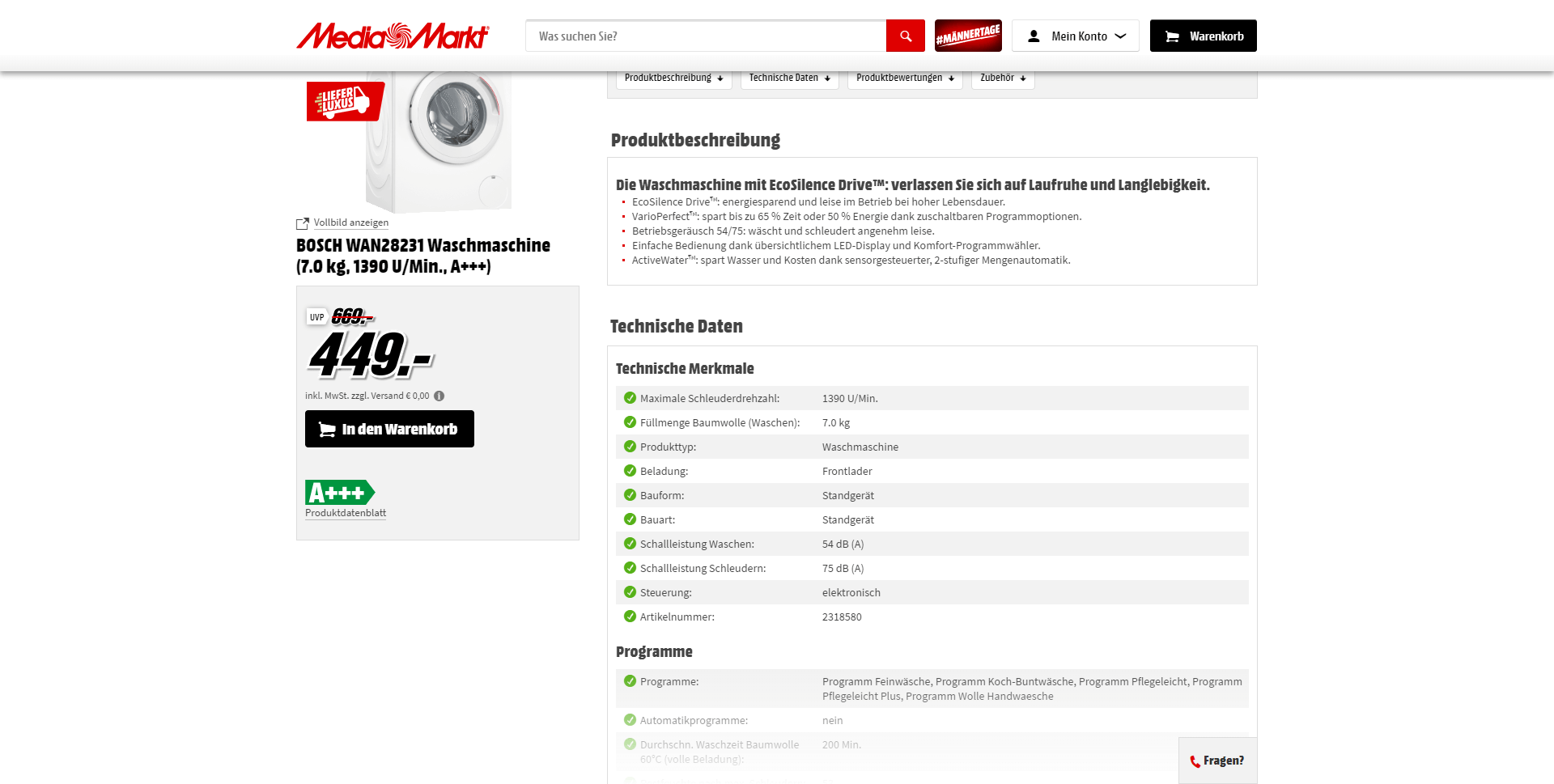
Example: MediaMarkt's Bosch washing machine listing leads with what the features deliver, not just what they are.
Industrial B2B buyers tend to need the specs too, but even they want to know the operational upside. A torque rating without a "suitable for M8 to M20 fasteners in high-vibration assemblies" use note is still half a description.
3. Write for a specific target audience
A safety equipment distributor writing for a procurement manager at a manufacturing plant needs different language than a fashion retailer writing for a 25-year-old looking for weekend clothes. The product description has to match the reader's vocabulary, concerns, and level of knowledge.
Define your target audience before you write. Consider age, role, technical background, and what decision they're trying to make. Then write to that person, not to a generic "customer." The more specific you are, the more the description resonates. Generic copy reads like it was written for nobody. It converts like it too.
One practical method: mine customer reviews for the exact language your buyers use. If they describe a product as "compact enough to fit in a work bag," that phrase belongs in your description. Buyers recognize their own words and trust copy that sounds like them.
4. Match tone to product and audience
Tone is a choice, not a default. Some products earn a dry, precise tone. Others work better with warmth or even light humor. A description for industrial fasteners should not read the same as one for children's toys.
The question to answer before writing: what emotional register makes this product credible and appealing to this specific buyer? A wrong-toned description creates friction even when the content is accurate. Get the tone right and the content lands harder.
5. Write to the right length
Length should follow complexity. Simple, low-cost products may need only 50 to 100 words. Complex or higher-value products benefit from 200 to 300 words that address features, benefits, and common buyer questions. The right length is whatever it takes for the buyer to feel confident, without padding or repetition.
A high-spec washing machine with installation requirements, cycle options, and energy ratings needs more space than a pack of screws. But even screws can have a description that sells: material, thread standard, load rating, use case.
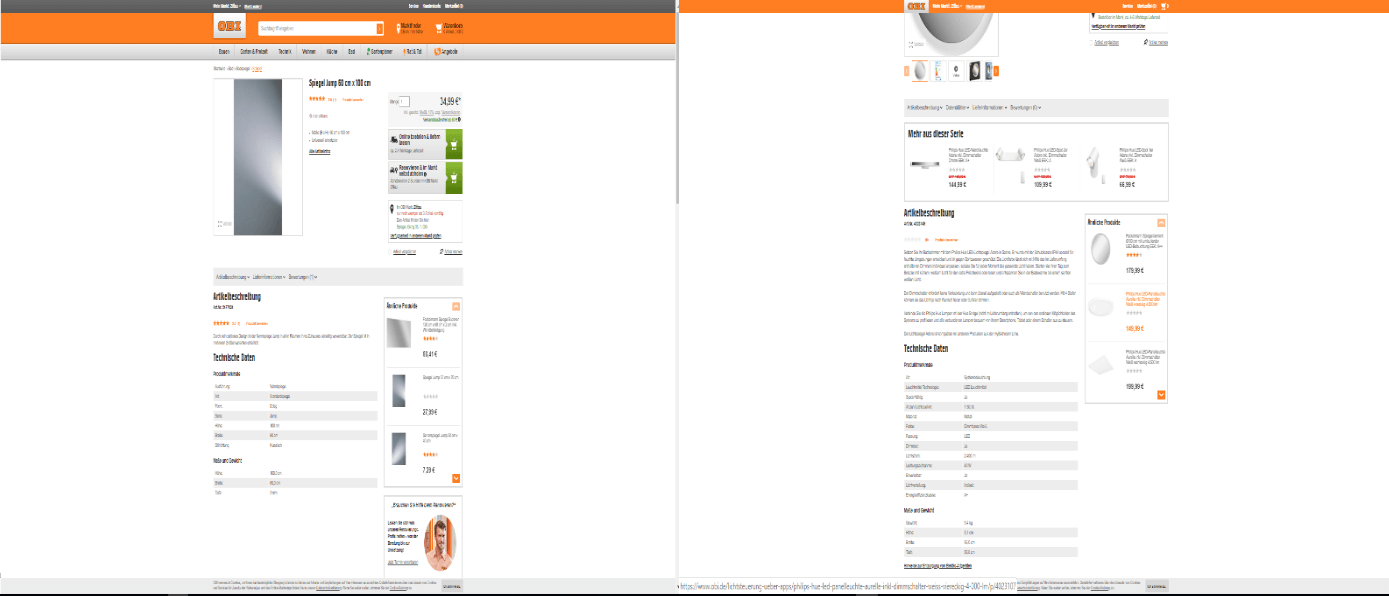
Example: OBI's adhesive mirror listing covers dimensions, fixing method, and surface compatibility in a compact format without padding.
Write until the product is fully explained. Then stop.
6. Structure for scanning
Most buyers don't read product descriptions word for word. They scan. A wall of unbroken text loses them fast. Structure the content so the key points surface quickly. This is especially important on mobile, where most e-commerce traffic now arrives and small screens punish long, unbroken paragraphs even harder.
Use short paragraphs with clear focus. Use H2/H3 headings in longer descriptions. Use bullet points for specification lists. Bold key phrases where it genuinely helps, not decoratively. Tables work well for comparing variants or technical attributes.
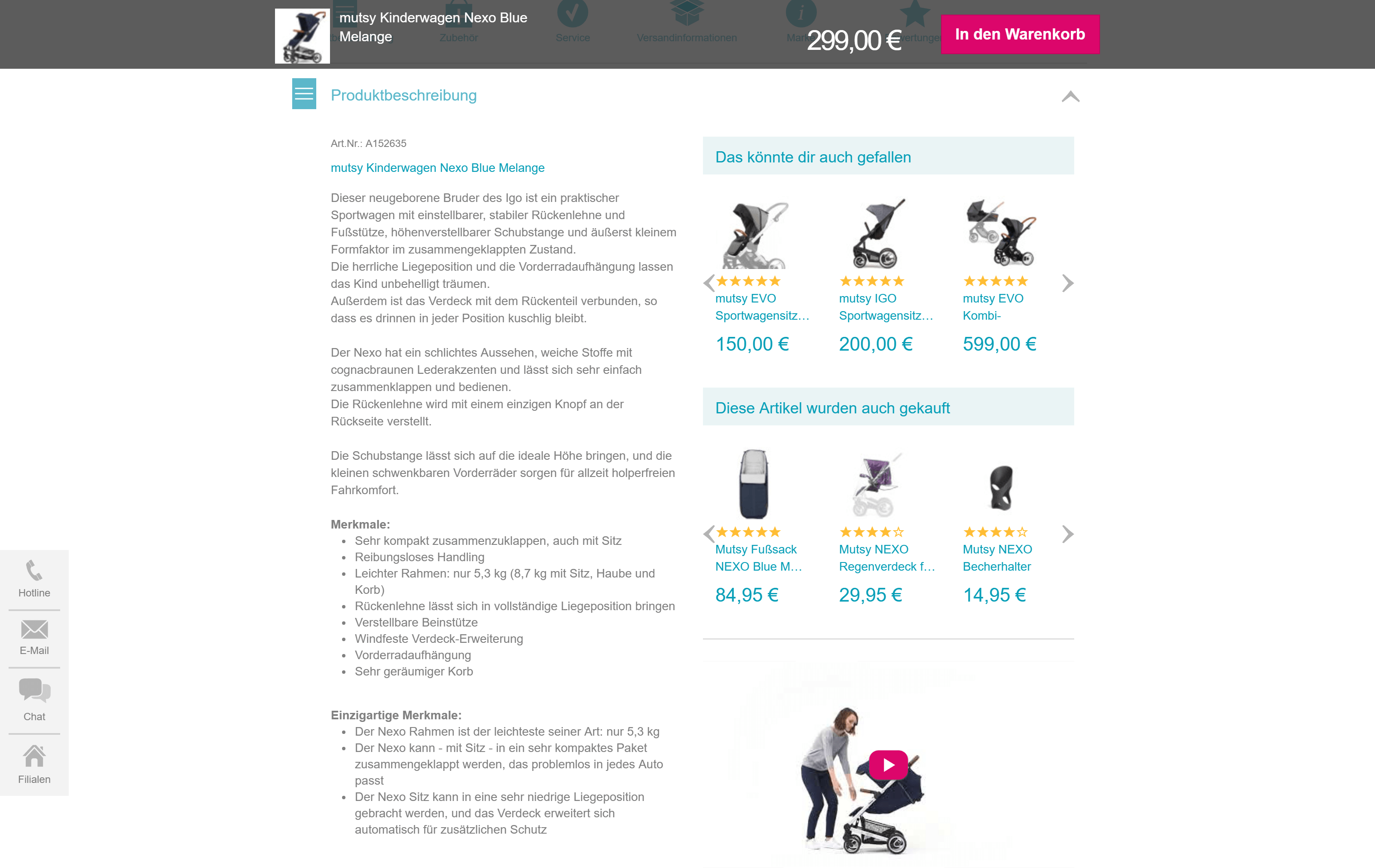
Example: Babymarkt structures the Mutsy stroller description into an intro, key benefits, and spec section, making it easy to scan at speed.
A content order that works across most product categories:
- Benefit-led or emotional opening sentence
- Core unique selling points in brief paragraphs
- Key specs and what they mean for the buyer
- Practical use context or buying advice
- Decision support: availability, warranty, compatibility
7. Answer every question before it's asked
According to research by the Nielsen Norman Group, 20% of purchase task failures in e-commerce studies were caused by incomplete or unclear product information. That's a large share of lost conversions from a solvable problem.
Think through every question a buyer might have. What materials is it made from? What's included in the package? What surface or use case is it designed for? What won't it work with? If you're selling to manufacturers or technical buyers, the list of questions is longer and more specific, but the principle is the same.
If a buyer leaves your page to search for an answer, there's a real chance they don't come back. They find the answer somewhere else, often on a competitor's page that also has the product.
8. Write product page copy that creates an emotional response
Buyers make decisions emotionally and justify them rationally. A product description that stays purely factual misses half the job. The emotional dimension doesn't require purple prose. It requires the right verbs and adjectives used deliberately.
Action verbs place the reader inside the experience: driving, cooking, building, carrying. Sensory adjectives make the product tangible: smooth, compact, robust, quiet. Two or three of these placed deliberately do more than a paragraph of general praise.
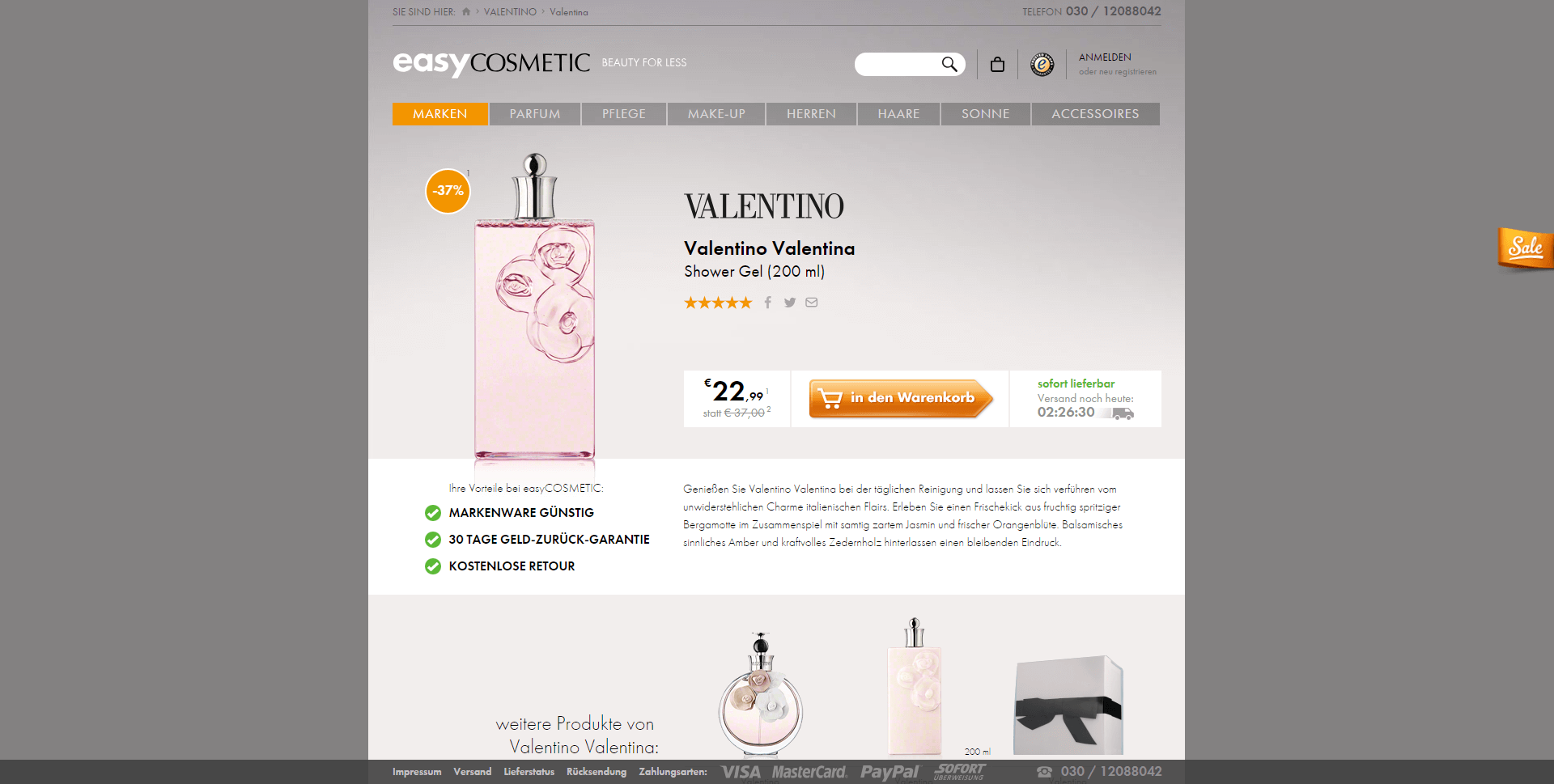
Example: The Valentino Valentina shower gel description uses scent-oriented language and sensory framing to make the product feel tangible before purchase.
Two or three well-chosen descriptors are worth more than a paragraph of adjectives. Excess kills credibility.
9. Give buying advice
Customers feel more confident buying when they feel advised, not just sold to. A short sentence pointing them toward the right variant for their situation, or noting that a particular accessory pairs well with the product, costs nothing to write and builds trust fast.
This is especially relevant in categories with multiple variants or technical options. In projects we've implemented for electrical components distributors, adding a single advisory line to each product description, something like "suitable for outdoor enclosures up to IP65; for full submersion applications, see the IP68-rated version," measurably reduced support contacts and returns. The buyer gets to the right product faster. The distributor reduces post-sale friction.
Industrial components, building materials, safety equipment: in all these cases, a manufacturer's catalog benefits from descriptions that guide the buyer to the right specification rather than leaving them to figure it out alone.
10. Use high-quality images and video
Product images don't support the description. They are part of it. A University of Minnesota study sponsored by 3M found that presentations using visual aids were 43% more persuasive than those without. On product pages, the effect is compounded: buyers can't touch, smell, or try a product, so images and video carry a disproportionate share of the selling work.
Multiple high-resolution images showing the product from all angles, in use, and in context are standard expectations now. For complex products, short videos or 360-degree views help buyers evaluate what a static image can't show. Research published in 2025 found that product detail pages have overtaken homepages as the first major touchpoint between brand and buyer, with product page landings rising to 36% of total traffic. Visuals carry more of that first impression than most brands realize.
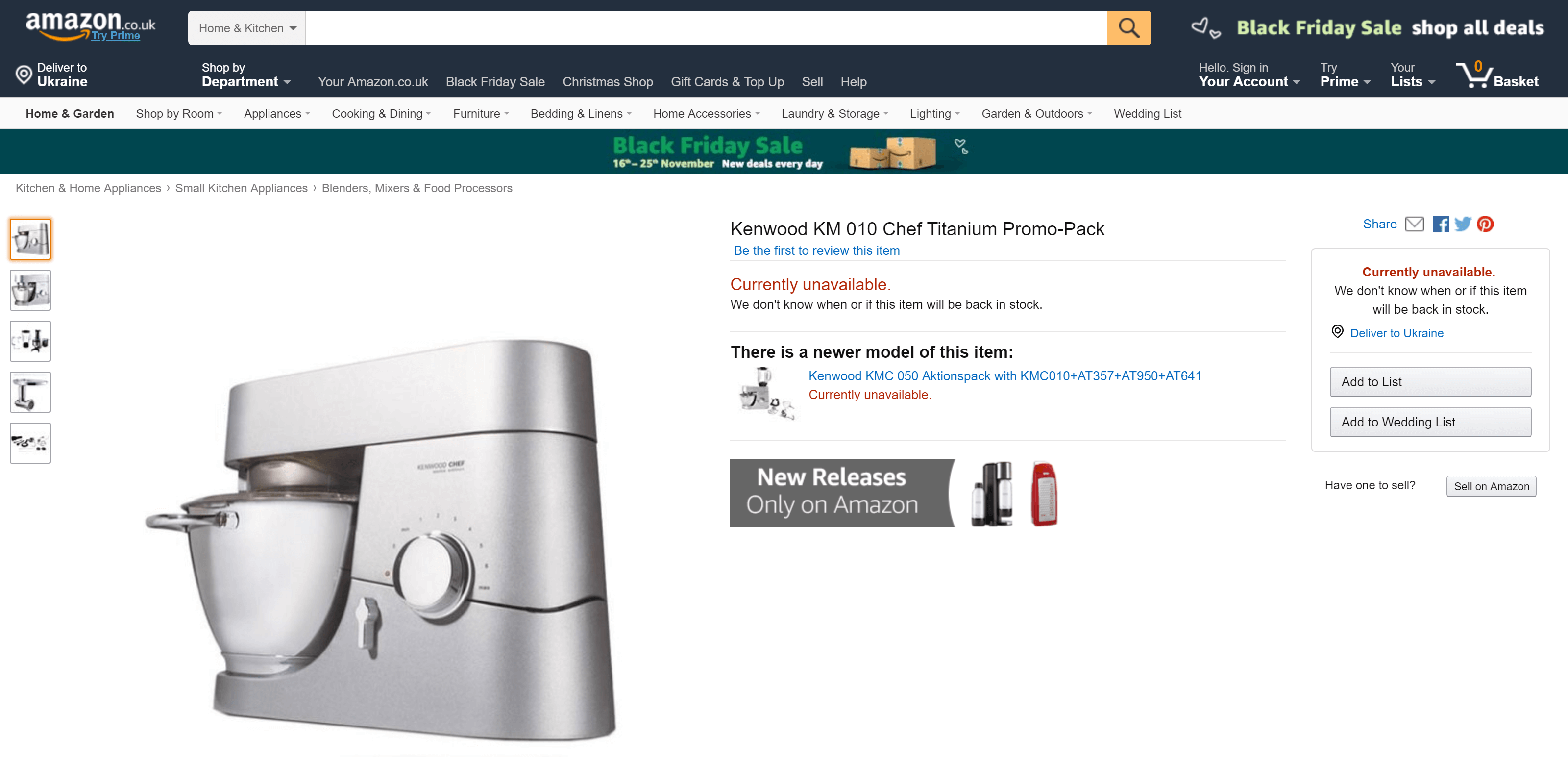
Example: This Titanium promo pack listing uses multiple product angles to compensate for the limits of a single photo.
For products where fit or form matters, virtual try-on features further reduce purchase uncertainty.
11. Show product variants and alternatives
If a product comes in multiple colors, sizes, materials, or configurations, present them. Buyers who don't find their preferred variant on the first listing don't always search further. They leave.
The same logic applies to accessories and cross-sell items. A clear, in-context mention of what pairs with the product serves the buyer and increases order value. Keep it relevant and non-intrusive.
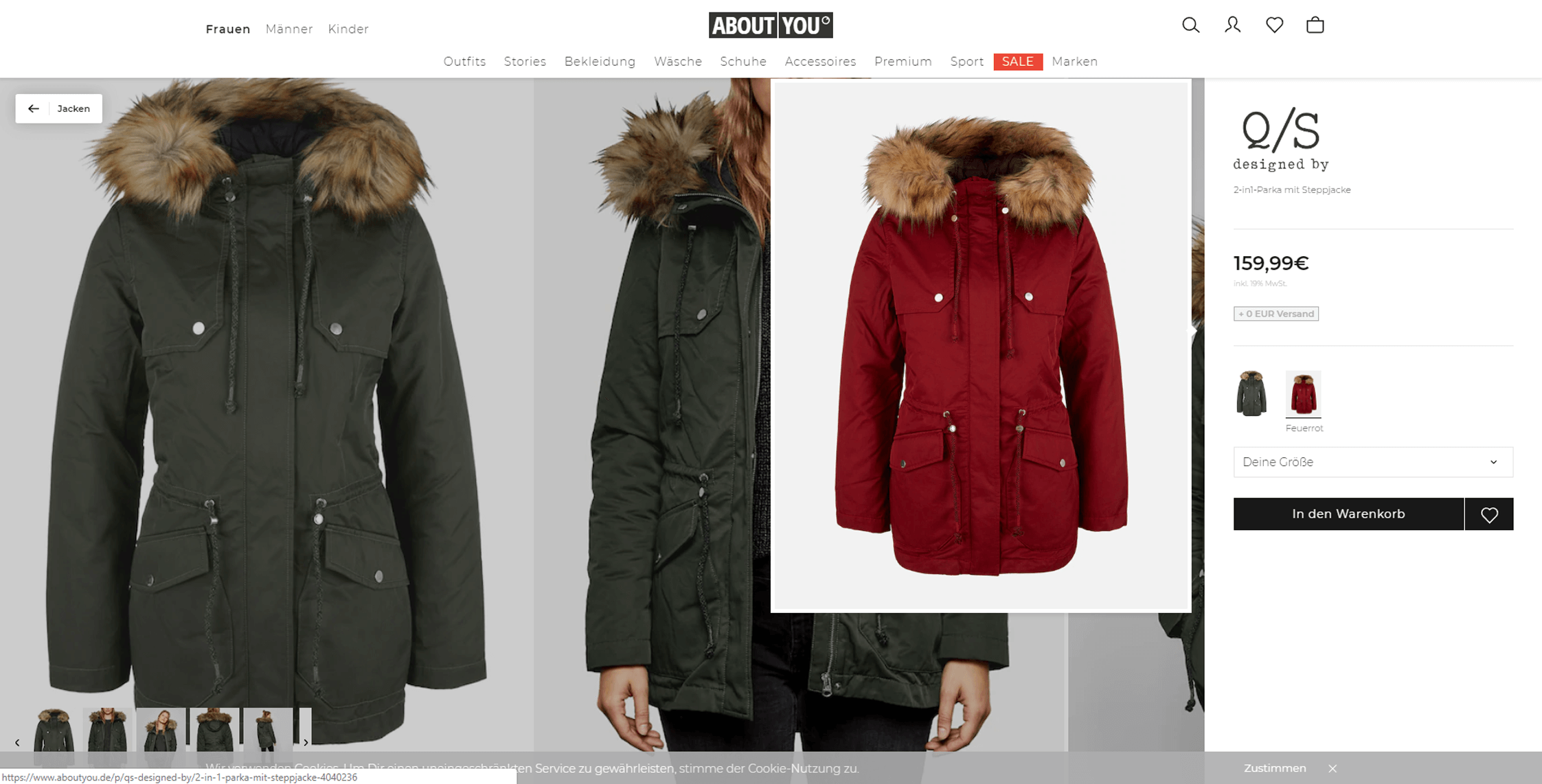
Example: AboutYou's 2-in-1 parka page presents all color variants inline, with direct links to each, so the buyer doesn't have to search.
12. Build credibility into the product description
Social proof changes buying behavior. Products that others have bought and rated well are easier to buy. Reference relevant third-party validation: awards, certifications, test results, brand heritage, independent reviews, or known users.
For B2B and industrial products, credibility cues look different: material standards, compliance certificates, test data, years in production. These aren't decorative; they resolve real purchase objections. If sustainability credentials are relevant to your product, include them: research by BusinessWire found that more than 70% of buyers are likely to favor sustainably made products over alternatives.
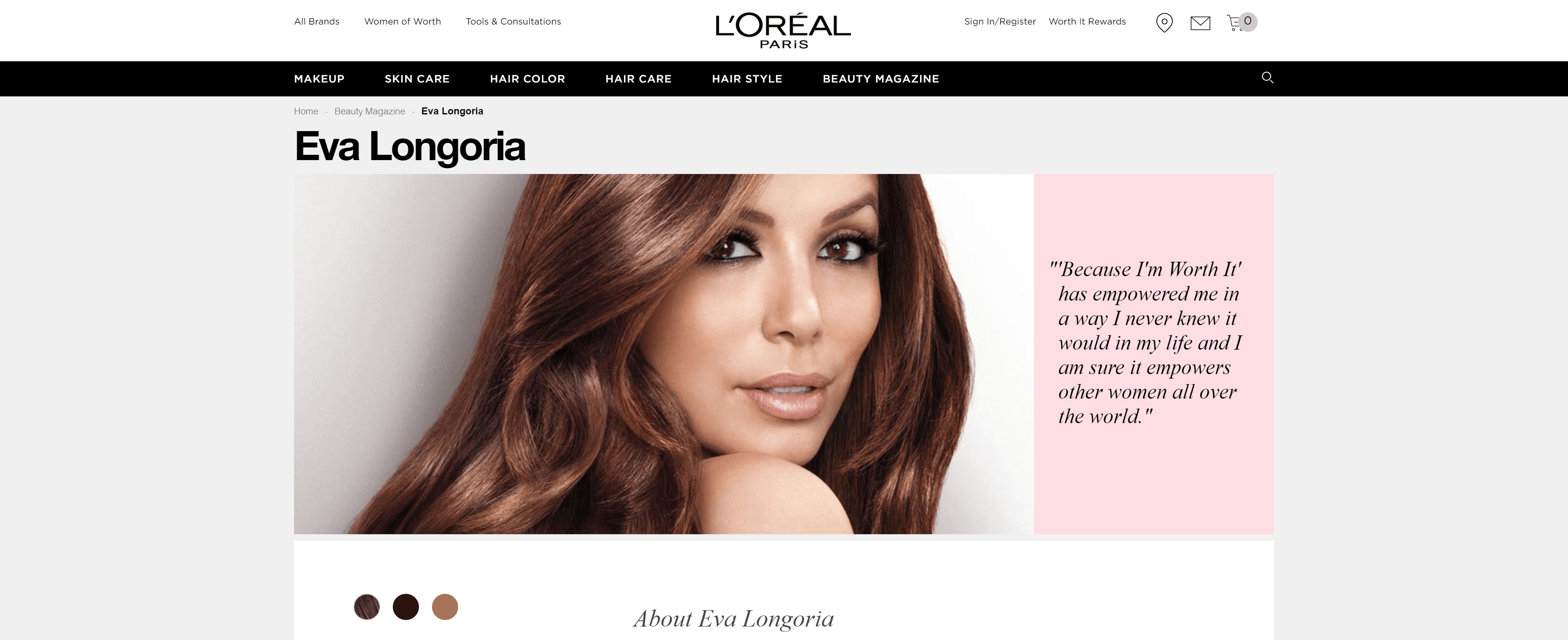
Example: L'Oreal Paris uses celebrity association as a credibility signal directly in the product listing.
One or two strong credibility signals outperform a list of unverifiable claims.
13. Cut the superlatives
"The best," "super quality," "unbeatable value" trigger skepticism, not confidence. They're common enough that buyers have learned to discount them. And they take up space that a concrete benefit could fill.
Replace superlatives with specifics. "Best in class" means nothing. "Rated 4.8/5 across 2,400 verified reviews" means something. "Premium quality" is vague. "Machined from 316L stainless steel with a 10-year warranty" is not.
14. Manage technical language carefully
Technical terms belong in product descriptions when the buyer expects and needs them. Procurement engineers reading component specifications want precise terminology. General consumers mostly don't.
When technical language is unavoidable in a consumer context, define terms briefly. A parenthetical explanation or a tooltip is enough. Leaving a buyer confused about a key spec costs conversions.
In B2B catalogs, the situation is more nuanced. The same product might need two descriptions: one for the procurement specialist, one for the plant manager who approves the order. If your platform supports audience segmentation, use it.
15. Eliminate errors before publishing
Errors erode trust. A product page with a typo reads as unprofessional, and grammatical mistakes raise doubts about whether the product information itself is accurate. Some error types are particularly damaging: wrong unit of measurement, incorrect compatibility claim, or a misspelled brand name all create hard objections that a clean description would not.
For large catalogs, a validation workflow that includes a grammar and consistency check before publication is worth building. Catching one "waterproof to 30m" that should read "3m" before it goes live is worth the overhead.
16. Remove empty phrases
Certain phrases appear in product descriptions constantly and mean nothing. "We're sure you'll love this product." "Exclusive offer." "Everything you need in one place." "High quality at an affordable price." None of these tell the buyer anything about the product, and experienced online shoppers filter them out automatically.
Cut them and replace with a specific claim. "High quality" becomes "welded seams, rated to 200 wash cycles." "You'll love it" becomes a second benefit sentence. "Everything you need" becomes a list of what's actually included. Every sentence should either describe the product, explain a benefit, answer a question, or remove an objection. Anything else is noise.
17. Use scarcity and offers when they're real
If stock is genuinely limited or a promotion is active, say so directly. "Only 3 left in stock," "Offer ends Friday," or "Reduced from 89 to 69 euros" are factual statements that help buyers decide. They work because they're true and verifiable.
Don't manufacture urgency. Permanent "flash sale" banners and fake countdown timers are transparent, and buyers distrust everything else on the page once they notice.
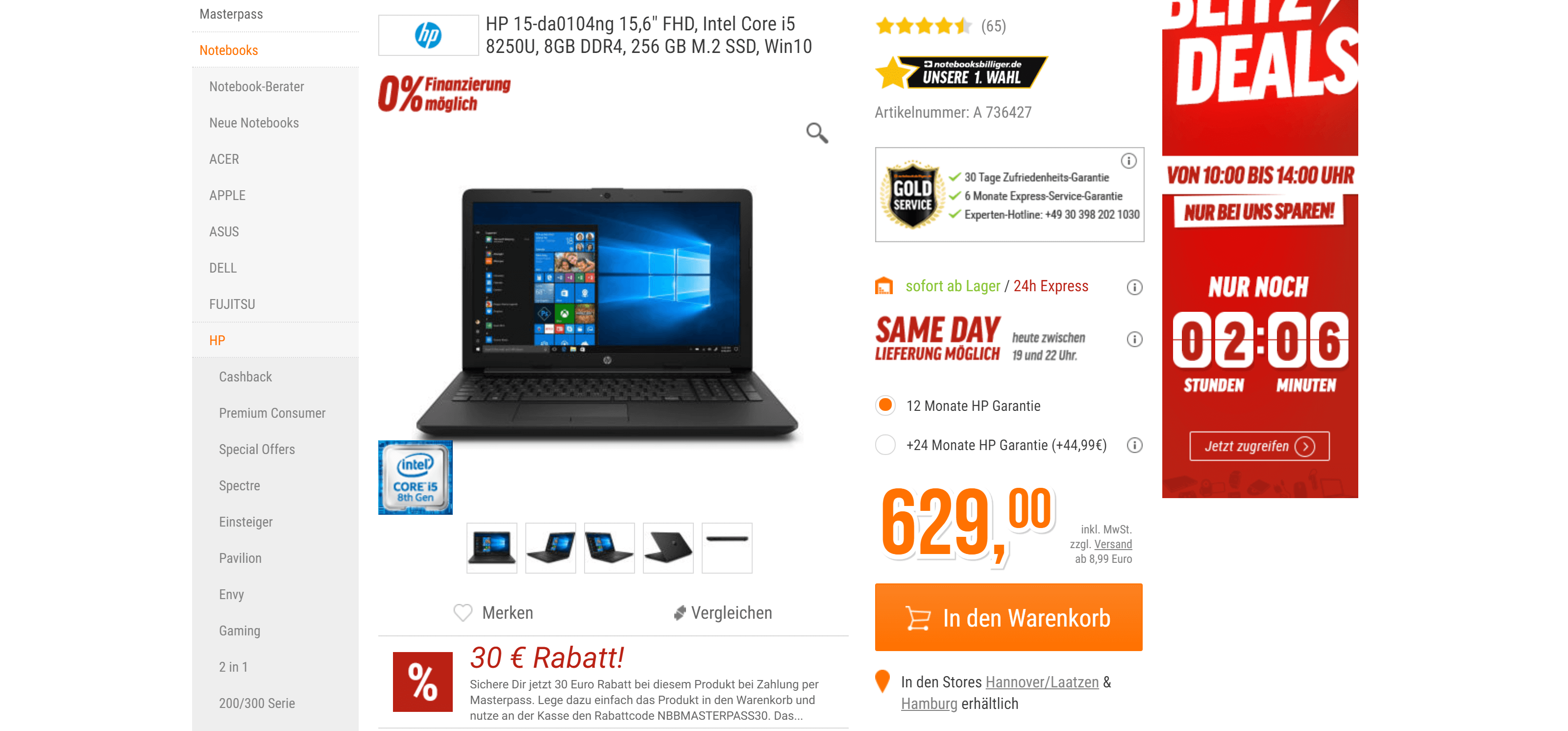
Example: This HP notebook listing presents pricing, availability, and promotional conditions clearly and factually.
18. Use storytelling where it fits
The human brain processes narrative more easily than data. A short story in a product description can make the product more memorable and more desirable, particularly for lifestyle, food, fragrance, and brand-led categories.
Story formats that work in product descriptions:
- Origin story: the history or craft behind the product
- Use case story: a realistic scenario of the product solving a problem
- Differentiation story: why this product, not the alternative
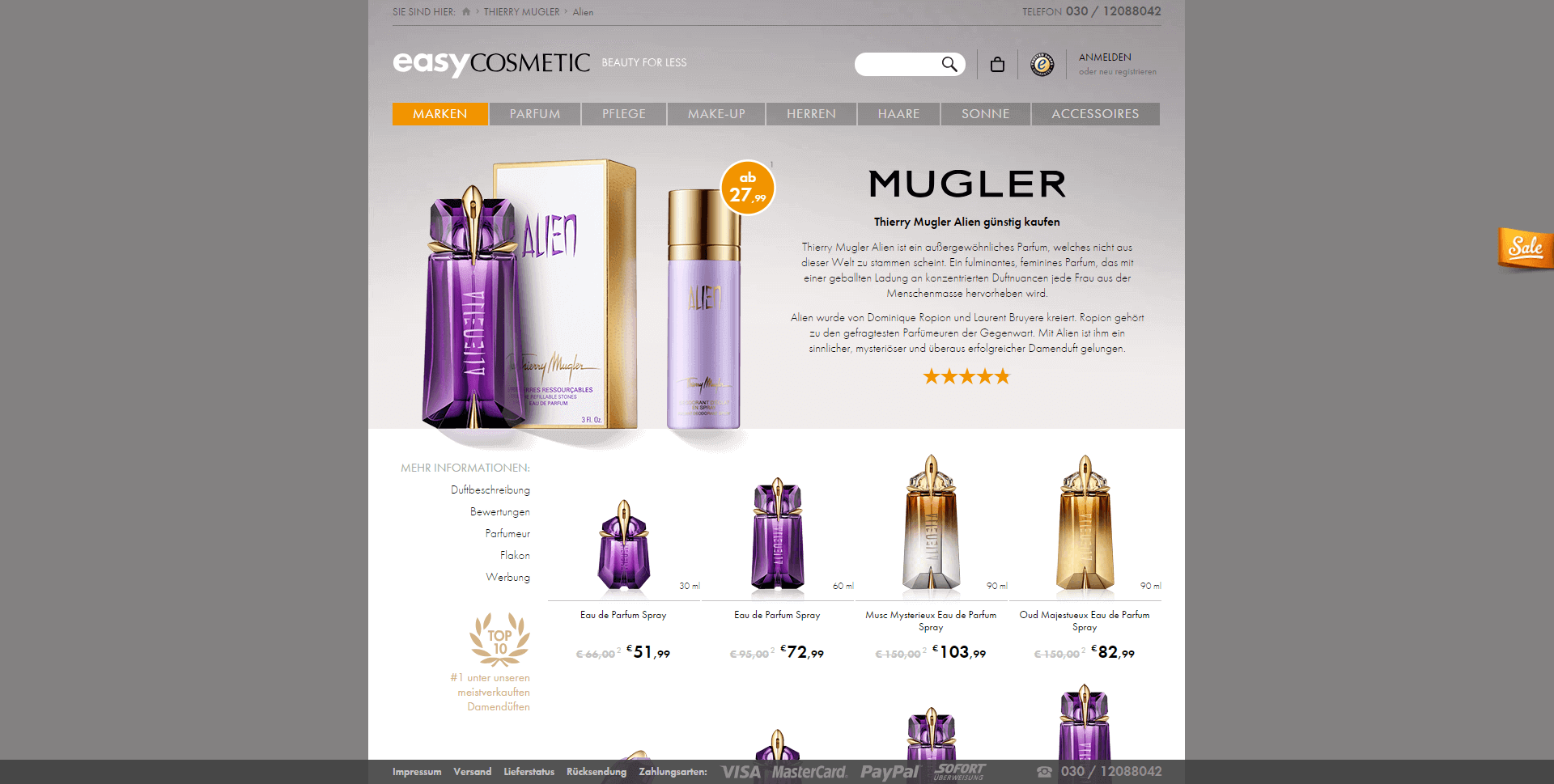
Example: Thierry Mugler's Alien fragrance description uses brand mythology and sensory language to make the product feel like an experience, not a commodity.
Storytelling doesn't suit every product category. A hydraulic coupling or a cable gland doesn't need a narrative; it needs accurate specs. Match the format to the product and buyer.
19. Develop a distinctive presentation style
Most product descriptions follow the same template: one paragraph of marketing text, followed by a bullet list of specs. Buyers process them automatically, which means they retain less.
A distinct style gives buyers something to remember. It can be a consistent structure, a particular voice, a format unique to your category, or a way of framing product benefits that no competitor uses. Buyers who recognize a store's description style before they even read the product name are more likely to trust what follows.
Style matters more in brand-led stores. In pure commodity categories it's a smaller lever. But in markets with similar products at similar prices, the description itself becomes part of what differentiates the offer.
20. Use automated generation for scale, with oversight
Large product catalogs can't always be written manually. Automated product description generation has become reliable enough to produce usable first drafts at scale, particularly for product families with consistent attribute structures.
The quality gap between automated and carefully written descriptions remains real. But the alternative to automated descriptions for a 50,000-SKU catalog isn't manually written descriptions. It's no descriptions, or one-line spec dumps. Automation closes that gap.
The right workflow uses automated generation as a starting point, with human review for high-traffic or high-margin products. A PIM system like AtroPIM makes this practical at scale: it centralizes product data, supports bulk description generation, and manages the editorial workflow across product families. The platform's modular architecture means you can run automated generation for long-tail products and apply full editorial attention where it matters.
21. Optimize for search after the content is complete
SEO optimization works best as a finishing step, not a starting constraint. Write the description for the buyer first. Enrich it with relevant keywords and semantic terms once the content is complete and readable.
Forcing keywords into a description before it's written leads to unnatural phrasing that serves neither the reader nor the search engine. Natural, detailed, buyer-focused content performs better in search than keyword-stuffed copy, and converts better too.
Target keywords belong in the product title, the first paragraph, and at least one subheading. LSI terms and semantic variants should appear naturally across the rest of the text. For keyword research, tools like Ahrefs or Semrush help identify terms your competitors rank for that you don't yet cover.
A practical product description template
Most effective product descriptions follow a structure close to this:
Product title: specific, benefit-containing, includes primary keyword where natural (e.g. "Waterproof Hiking Backpack, 35L" not "Premium Outdoor Bag")
Opening paragraph: one or two sentences that lead with the primary benefit and set the emotional context
Key selling points: two to four short paragraphs or a bullet list that turns features into outcomes the buyer cares about
Specifications: dimensions, materials, compatibility, what's included
Decision support: warranty, availability, care or usage notes, a closing statement that removes the last objection
This structure works for most product categories. Consumer goods tend to weight the opening paragraph and selling points more heavily. Technical and industrial products shift weight toward specifications and decision support. Neither is wrong. The ratio depends on what the buyer needs to feel confident enough to buy.
What makes product description writing examples worth studying
Good product description examples are worth analyzing because they reveal the gap between what most product pages do and what the best ones do. The best ones are not simply "better written." They're built around a specific buyer, a specific benefit, and a specific objection that needed resolving.
The common thread across all 21 tips is specificity. Specific benefits beat generic claims. Specific audiences respond better than generic buyers.
At scale, maintaining that specificity is the hard part. In projects we've implemented with manufacturers and distributors managing tens of thousands of SKUs, the problem isn't knowing what a good product description looks like. It's having the infrastructure to produce and maintain them consistently. That means clean, structured product data feeding into a controlled publishing workflow, with the ability to segment content by audience, market, and channel, and a process for tracking which descriptions are actually converting.
AtroPIM is built for that problem. It handles complex product data structures, supports multilingual content, and integrates with e-commerce platforms and ERP systems directly. Catalogs that were previously managed in spreadsheets, with inconsistent description quality and no audit trail, become manageable and measurable.
A well-written product description is worth studying. A system that produces thousands of them consistently, and lets you track performance and iterate, is what actually scales.