
Web-to-Print Definition
Web-to-print (W2P) is an online process that lets users create, customize, and order printed materials through a web browser. The user picks a template, enters or edits content in a form, previews the result, and the system generates a print-ready file, usually a PDF, which is sent to a printer or downloaded.
How does web-to-print work?
A designer first builds templates with fixed elements, such as the logo, layout, fonts, and colours, and editable fields, such as a name, phone number, product image, or price. Users then fill in only the editable fields through a simple online editor. They never touch the design itself, so every result stays on-brand and technically correct for printing.
Typical outputs include business cards, flyers, posters, promotional brochures, shelf labels, and point-of-sale materials.
Who uses web-to-print?
Print service providers use it to let customers design and order print products online. Companies with many branches, dealers, or sales partners use internal web-to-print portals so local teams can produce their own materials, for example a store flyer with local prices, without involving a designer or agency each time. Brand owners keep control of the design, while local users get what they need quickly.
How is web-to-print different from database publishing?
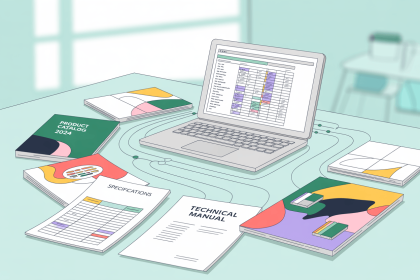
Both automate the production of print materials from templates, but the content comes from different places. In web-to-print, a person enters the content manually through a form, usually for single, short documents. In database publishing, content flows automatically from a central data source into templates, which suits large, structured publications such as product catalogs, price lists, and data sheets.
The two can also be combined. A web-to-print template can pull product names, images, and prices directly from a Product Information Management (PIM) system, so a dealer creating a promotional flyer selects products from a list instead of typing their details. This reduces errors and keeps printed materials consistent with the data used in the webshop and other channels.