


Product data without structure is just noise. A product classification system turns raw product information management into something machines can process, compare, and exchange reliably. For manufacturers and distributors selling across multiple channels or trading partners, classification standards are the common language that makes automated data exchange possible without custom mapping for every connection.
What Is a Product Classification System?
A product classification system is a structured framework that assigns products to defined categories and maps attributes to those categories. Every product gets a class. Every class carries a set of relevant attributes. Every attribute has a defined unit and allowed values.
Two companies using the same standard can exchange product data without building a custom integration from scratch. A supplier exports a product record under eCl@ss code 27-27-04-01 (circuit breakers), and the buyer's procurement system knows exactly which attributes to expect. No manual cleanup. No guesswork about what "voltage" means in this file versus that one.
This matters most in industries with large, technically complex product catalogs: electrical engineering, construction materials, industrial equipment, automotive components. In these sectors, a single product can carry 40 or more technical attributes, and any ambiguity in how those attributes are defined creates errors downstream, in orders, in catalogs, in export documentation.
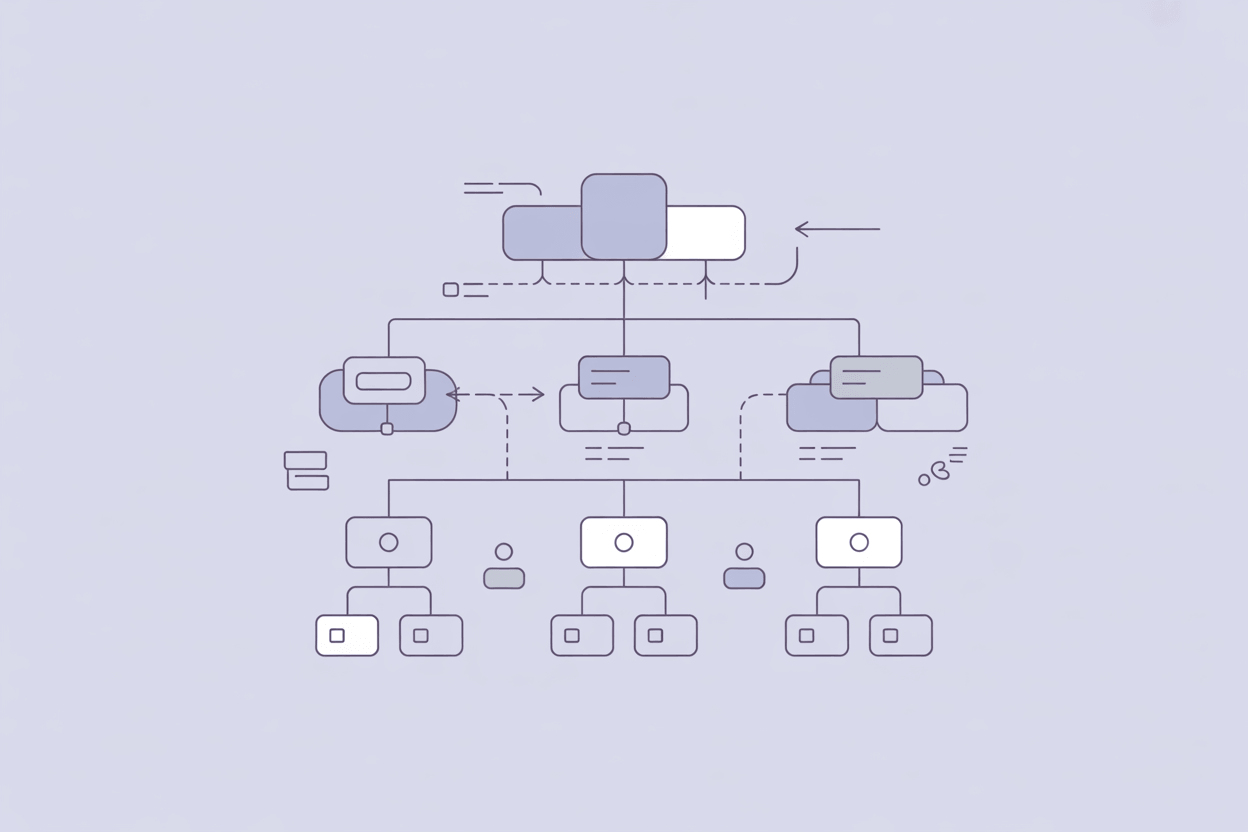
Product classification is also closely related to product taxonomy, but they are not the same thing. A product taxonomy is a hierarchical structure of categories, the tree of segments, families, and groups. A classification standard combines taxonomy with attribute definitions: it does not just say where a product belongs, it specifies what data that product must carry. This distinction matters when evaluating standards, because some systems provide only the hierarchy while others provide the full attribute model.
Approaches to Product Classification
Classification systems serve different purposes. Not all of them define product attributes. Some classify industries, not products. Some are designed for customs, not catalogs.
Internal classification is a proprietary product taxonomy a company builds for its own needs. It may reflect their product range, their ERP structure, or their sales logic. It is flexible and fast to implement but creates friction the moment data needs to move outside the organization. Internal hierarchies also tend to drift over time as teams add categories inconsistently, which is one of the main reasons product data quality degrades at scale.
Industry-specific classification standards define both the product category and the attribute set that belongs to it. ETIM and eCl@ss work this way. They are the right choice when you need structured data exchange with trading partners in the same sector, because both sides of the exchange share the same attribute model.
Cross-industry and trade classification systems define product categories for statistical, procurement, or customs purposes, without necessarily specifying attributes. UNSPSC, GPC, and the Harmonized System (HS codes) fall here. They answer "what type of product is this" at a level suitable for spend analysis, tariff calculation, or global data synchronization, but they do not drive the attribute-level detail needed for technical product data exchange.
Many companies need more than one approach simultaneously: an internal taxonomy for catalog management, an industry-specific standard for wholesale data exchange, and HS codes for cross-border shipments. The key is knowing which system serves which purpose, and not expecting any single product classification standard to do all of it.
Industry-Specific Product Classification Standards
ETIM
ETIM (European Technical Information Model) is a hierarchical classification standard built specifically for the electrical, HVAC, and installation technology industries. Products are assigned to article classes. Each class carries a fixed set of technical features, each feature has a defined unit and allowed values.
The structure is strict by design. A manufacturer of circuit breakers and a wholesaler importing that data both reference the same class definition. There is no room for interpretation, which is exactly what makes ETIM useful for automated data exchange at scale.
ETIM is the dominant product classification standard for electrical product data exchange in Europe. Most major electrical wholesalers require ETIM-compliant data from suppliers. ETIM International maintains the standard and publishes annual releases; ETIM 9 covers tens of thousands of article classes across the core domains.
Proficl@ss, previously a separate classification standard for the building technology and sanitary sector, has been merged into ETIM. Its classes, features, and values are now part of the ETIM structure. ETIM and eCl@ss have also been harmonized at the class level, so values map across both standards. Companies that supply data in both formats benefit directly: the harmonization eliminates most of the duplicate mapping work.
eCl@ss
eCl@ss is a cross-industry classification standard for products and services in B2B commerce. It covers a broader scope than ETIM: industrial equipment, chemicals, logistics services, MRO categories, and more. The standard conforms to ISO and IEC and sees wide use in German-speaking markets, with growing international adoption.
eCl@ss organizes products in a four-level hierarchy: segment, main group, group, commodity. Each commodity carries a defined set of properties with units and value lists. If two suppliers both classify a product under the same eCl@ss commodity, the attribute set is identical, regardless of who prepared the data.
Manufacturers use eCl@ss both for supplier-to-customer data exchange and internally, for catalog management, procurement systems, and ERP master data standardization. Its cross-industry scope makes it particularly useful for manufacturers whose product range spans multiple categories that a narrower standard like ETIM would not fully cover.
IEC Common Data Dictionary (IEC CDD)
The International Electrotechnical Commission maintains the IEC Common Data Dictionary, a product classification and description standard covering electrotechnical products and systems. IEC CDD defines properties, classes, and values at a technical standards body level, grounded in international IEC norms rather than commercial practice.
In scope, IEC CDD overlaps closely with eCl@ss and has influenced ETIM's attribute definitions, but its primary use is regulatory and standards compliance rather than commercial data exchange. A manufacturer producing low-voltage switchgear, for example, must document product properties against IEC 61439. IEC CDD provides the standardized property definitions those documents reference. Where eCl@ss or ETIM give you the commercial classification for trading, IEC CDD gives you the normative definitions that sit behind it. In practice, manufacturers in regulated electrotechnical categories often need both: eCl@ss or ETIM for their wholesale channel, IEC CDD as the reference layer for product compliance documentation.
Cross-Industry and Procurement Classification Standards
UNSPSC
UNSPSC (United Nations Standard Products and Services Code) is a global classification system used primarily in procurement and supply chain contexts. The UN Development Programme introduced it in 1998. It uses a four-level hierarchy (segment, family, class, commodity) and assigns an eight-digit code to every product or service category.
The standard sees wide use in North America and international trade, particularly in public sector procurement and enterprise purchasing systems. It does not define product attributes the way ETIM or eCl@ss do. UNSPSC identifies the category of a product for spend analysis and procurement reporting, but it does not specify which technical attributes a product must carry.
Companies bidding on public tenders or integrating with enterprise procurement platforms in North America often need UNSPSC codes. They work alongside attribute-rich standards rather than replacing them.
GPC
GPC (Global Product Classification) is the classification component of the GS1 standards framework. It defines a four-level hierarchy of segments, families, classes, and bricks, with attribute lists and value sets at the brick level.
GS1 designed GPC to work alongside its other standards, including the Global Trade Item Number (GTIN) and the Global Data Synchronization Network (GDSN). Retailers and suppliers in consumer goods, healthcare, and foodservice use it to synchronize product data through shared data pools. A single GPC brick code gives trading partners a shared reference for what product type they are dealing with and what attributes to expect at that level.
GS1, the organization behind barcodes and EAN codes, maintains the standard. It is accessible via PDF, XML, or Excel download.
Harmonized System (HS Codes)
The World Customs Organization developed and maintains the Harmonized System, a six-digit product classification framework that over 200 countries use as the basis for customs tariffs and international trade statistics. Every physical good crossing a border must carry an HS code.
HS codes classify products by physical characteristics: material, function, intended use. They do not define attributes in the commercial sense. A 10-amp circuit breaker and a 63-amp circuit breaker may share the same HS heading because customs does not need that level of technical detail. Individual countries extend the HS to eight or ten digits for domestic tariff purposes (the EU uses CN codes, the US uses HTS codes), but the first six digits stay globally harmonized.
For manufacturers exporting products, HS codes are unavoidable. They determine duty rates, trigger compliance checks, and appear on all shipping documents. Storing HS codes in a PIM alongside commercial product data eliminates the manual lookup that otherwise happens at order processing or export documentation, and prevents misclassification errors that cause customs delays.
Why Product Classification Matters in Practice
In projects we implemented for industrial equipment manufacturers, one recurring problem was the same product appearing under different category names across different sales channels, with inconsistent attribute sets at each one. A hydraulic fitting called "connector" in one system, "coupling" in another, "adapter" in a third. Each with a different list of attributes filled in by different people over years.
Adopting a classification standard does not fix legacy data automatically. But it provides the reference point that makes cleanup possible and prevents the problem from recurring. Once a product is assigned to an ETIM class or eCl@ss commodity, the attribute set is fixed. New products get the right attributes from day one, and the definition of "complete" becomes something you can enforce rather than approximate.
There is a less obvious benefit that often takes companies by surprise: discoverability. Structured, classified product data performs better in search, both in internal catalog search and in external channel search. When product attributes are consistently named and valued, faceted filtering works correctly. A buyer searching for a contactor rated at 400V AC finds all relevant products, not just the ones where someone happened to type "400 V" the same way.
Our customers in electrical wholesale and building materials distribution typically see the biggest return from classification adoption when they are scaling EDI connections with trading partners. Without a shared standard, every new supplier connection requires a custom attribute mapping project. With ETIM or eCl@ss in place on both sides, that mapping is largely resolved at the standard level, and onboarding a new data feed becomes an operational task rather than a development project.
A product classification system does not create product data. It creates the conditions under which product data can be trusted, compared, and exchanged without manual intervention at every step.
Implementation: How to Start
The most common mistake is treating classification as a data migration project. It is not. It is a data governance decision that needs to happen before the migration begins.
In our experience, manufacturers that attempt to classify products retroactively, after years of inconsistent internal taxonomies, spend two to three times longer on the project than those who define the classification model first and build data quality rules around it from day one.
The practical starting sequence looks like this:
- Identify which external standards your trading partners actually require. This is not a strategic question, it is a market requirement. Your wholesale channel will tell you.
- Map your existing internal product hierarchy to the target standard to find where your categories align and where they diverge.
- Configure your attribute model to match the class definitions in the chosen standard, so new products are enriched correctly from creation rather than retroactively.
- Work through existing SKUs in priority order, starting with the product families that generate the most channel activity.
Attribute mapping between an internal taxonomy and an external classification standard is the most labor-intensive part of the process. A product family managed with 12 internal attributes may need remapping to 28 ETIM features, some of which your current data does not contain. That gap is not a failure of the classification standard. It is a visibility tool: it shows exactly what data needs to be collected.
AI-assisted classification tools can accelerate the initial mapping. Several PIM platforms now support auto-classification features that suggest ETIM or eCl@ss assignments based on existing product descriptions and attributes. These tools work best on product families with consistent existing data and need human review for edge cases and new product categories. They are a useful accelerator, not a substitute for the governance decisions that make classification sustainable.
Choosing the Right Standard
No single product classification system fits all industries or all use cases. The right choice depends on your sector, your trading partners, and your geography. This table summarizes the main options:
| Standard | Primary use | Attribute-level | Best fit |
|---|---|---|---|
| ETIM | Electrical, HVAC, installation | Yes | European electrical manufacturers and wholesalers |
| eCl@ss | Cross-industry B2B | Yes | Industrial manufacturers, MRO, German-speaking markets |
| IEC CDD | Electrotechnical compliance | Yes | Regulatory documentation, IEC-regulated products |
| UNSPSC | Procurement, spend analysis | No | Public tenders, North American enterprise procurement |
| GPC | Consumer goods, retail | Partial | GS1 GDSN participants, consumer goods supply chains |
| HS codes | Customs and trade | No | Any company shipping products across borders |
Many companies need more than one. A manufacturer of electrical components selling in Europe may need ETIM for wholesale channel data, eCl@ss for a German industrial customer's procurement system, UNSPSC for a US corporate buyer, and HS codes for export documentation. These are not competing product classification standards. They address different problems at different points in the data supply chain.
How AtroPIM Supports Product Classification Standards
AtroPIM manages product data that conforms to external classification standards, not just internal taxonomies. It supports custom classification hierarchies, attribute-level configuration at the class level, and import/export workflows that align with ETIM and eCl@ss data structures.
AtroPIM builds on the AtroCore platform, so the underlying data model can mirror the attribute structures defined by external standards without hardcoding. You can configure attribute completeness rules per product class, so a product assigned to an ETIM class cannot publish until all required features are filled in. That enforcement happens at the data level, not through manual review checklists.
For companies that need to deliver classified product data to wholesale portals or procurement systems, AtroPIM's database publishing module generates structured exports in formats those systems accept, including ETIM-structured feeds. Classification in AtroPIM is not a locked-in model. If you start with a simplified internal product hierarchy and later need to map to eCl@ss or ETIM, the attribute configuration and class structure can evolve without rebuilding product data from scratch.
The Role of PIM in Making Classification Work
A product classification system defines what structure your data should have. A PIM system is where that structure gets applied, maintained, and enforced across every product record in your catalog.
Without a PIM, classification data ends up in spreadsheets or ERP fields not designed for it. Attribute sets drift. Teams cannot monitor completeness at scale. The standard exists on paper but degrades in practice as soon as someone adds a product manually in the wrong place.
With a PIM that models the classification correctly, every product record references a class, inherits its attribute set, and passes completeness and data quality rules before it reaches any channel. When a new ETIM release revises feature sets, those updates apply systematically across all affected product classes rather than field by field.
For manufacturers with thousands of SKUs across dozens of product families, that operational difference determines whether a classification project actually improves data quality in production or just adds a compliance layer the team works around. Choosing the right product classification standard is a one-time decision. The PIM is what makes it hold.