
Circular Economy Definition
The circular economy is an economic model in which materials and products are kept in use for as long as possible through reuse, repair, refurbishment, and recycling, rather than being used once and thrown away. The goal is to design out waste, keep resources circulating at their highest value, and reduce the need to extract new raw materials.
How is it different from the linear economy?
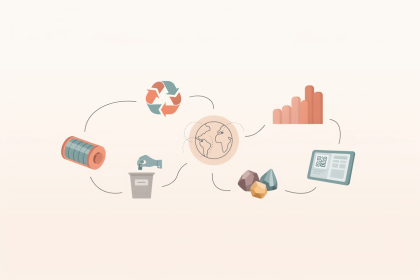
The traditional model is linear, often summarised as "take, make, dispose": raw materials are extracted, turned into products, used, and then discarded as waste. A circular economy closes that loop. Instead of ending at disposal, products and materials are cycled back into use — a worn item is repaired, an old device is refurbished and resold, and materials that can no longer serve their original purpose are recycled into new ones. Waste, in effect, becomes a resource rather than an endpoint.
What are the main strategies?
Circular thinking is often described as a hierarchy, with the most value-preserving options coming first:
- Reduce — use fewer materials and design products to last longer
- Reuse — use a product again for the same purpose, sometimes after cleaning or refilling
- Repair — fix a product so it can keep working rather than replacing it
- Refurbish / remanufacture — restore or rebuild a product to like-new condition
- Recycle — process materials into secondary raw materials when other options are exhausted
Recycling sits near the bottom because it recovers materials but usually loses some value and quality; keeping a product whole and in use is generally preferable.
How does product data fit in?
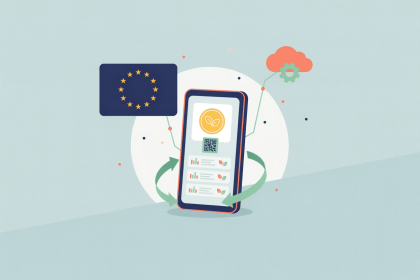
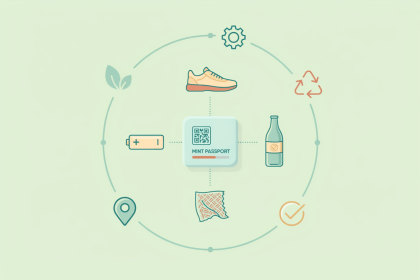
A circular economy depends on knowing what a product is made of, how to repair it, and how to handle it at end of life — and that information has to travel with the product. EU rules such as the ESPR introduce Digital Product Passports precisely to carry this data. To supply it reliably across many products and channels, businesses often rely on a Product Information Management (PIM) system, which keeps material composition, repairability, and recyclability details accurate and consistent, the same data foundation that makes circular claims verifiable rather than marketing.
Why does the circular economy matter?
Extracting and processing raw materials is a major driver of environmental pressure, from carbon emissions to biodiversity loss, and many resources are finite. By keeping products and materials in circulation, a circular economy reduces waste, lowers dependence on virgin resources, and can cut costs over a product's life. It underpins major policy efforts such as the EU's Circular Economy Action Plan, which sits within the European Green Deal and shapes regulations like the ESPR and the PPWR.