
Data Quality Definition
Data Quality is a measure of how accurate, complete, and consistent data is across systems and channels.
High-quality data is reliable enough to act on: a product record that can be published without manual review, a stock level that can be trusted without a physical recount, a customer address that does not cause a failed delivery.
What makes data high quality?
Data quality is usually assessed across several dimensions:
- Accuracy — the data correctly reflects the real world (the weight listed matches the actual product weight)
- Completeness — all required fields are filled (no missing descriptions, images, or identifiers)
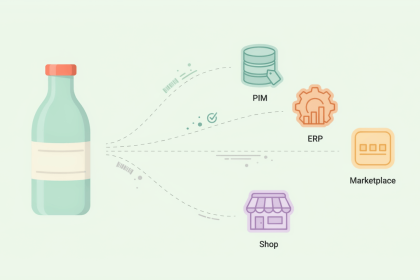
- Consistency — the same data looks the same across systems (a product name is not spelled differently in the ERP and the storefront)
- Timeliness — data is up to date and reflects the current state of the product or inventory
Why does it matter for ecommerce and integration?
Poor data quality creates compounding problems. A missing attribute causes a product to be rejected by a marketplace. An inconsistent product name breaks a search match between a PIM and an ERP. An outdated stock level leads to overselling. The further bad data travels across systems, the more damage it causes and the harder it becomes to trace back to the source.
How is data quality maintained?
Through a combination of data governance rules, validation at the point of entry, regular audits, and tools that surface completeness scores and error flags automatically.