
ETIM Class Definition
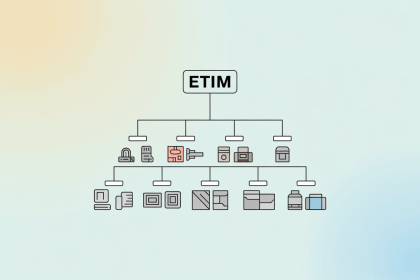
An ETIM (European Technical Information Model) class is a standardised product category used in technical industries, primarily electrical, HVAC, and industrial, that groups similar products together and defines exactly which technical attributes must be used to describe them.
Each class acts as a shared template: any product assigned to it carries the same set of attributes, in the same format, with the same units of measurement. This makes product data consistent and machine-readable across manufacturers, distributors, and buyers, regardless of which software system they use.
What does an ETIM class contain?
Every ETIM class includes three components:
- A class code and name a unique identifier (e.g.,
EC001234) paired with a plain-language product category name (e.g., "Circuit Breaker") - A set of features the technical attributes relevant to that product type, such as voltage rating, number of poles, or mounting type
- Defined values and units each feature specifies the allowed data type (numeric, range, logical, or alphanumeric) and, where applicable, the unit of measurement
A circuit breaker class, for example, will always ask for rated current, rated voltage, number of poles, and tripping characteristic. Every manufacturer filling in that class answers the same questions in the same way.
How is an ETIM class different from a product category?
A product category (like "circuit breakers" in a catalogue) is typically a label created by one company for one system. An ETIM class is an industry-agreed standard maintained by a neutral body, ETIM International, with input from manufacturers and distributors across Europe and beyond.
The practical difference: two manufacturers using the same internal category name might structure their data completely differently. Two manufacturers using the same ETIM class will produce data that can be automatically compared, imported, and used by anyone else who supports ETIM.
Why does this matter for product data?
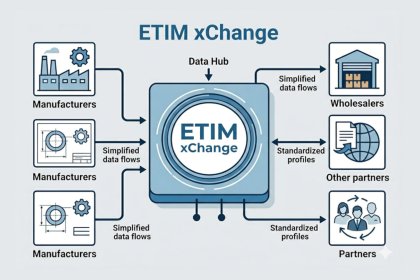
Technical distributors often carry products from hundreds of manufacturers. Without a common classification standard, each supplier delivers data in a different structure, with different attribute names, different units, and different formats. The distributor must then manually remap or clean it before it can go into their catalogue or ERP system.
ETIM classes eliminate that remapping work. When a manufacturer classifies a product correctly and populates its ETIM features, any distributor or buyer using an ETIM-compatible system can import that data directly, with no translation needed. This is where product data classification becomes a strategic concern: the more consistently products are classified at the source, the less manual work is required downstream.
This becomes especially important in sectors like electrical wholesale, where a single distributor may need to manage structured data for tens of thousands of SKUs across dozens of suppliers.
Who assigns ETIM classes?
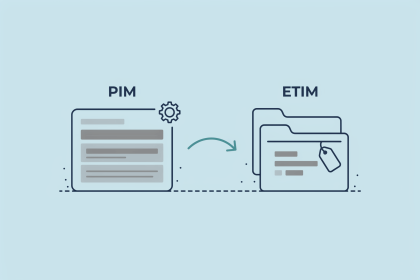
Manufacturers are responsible for classifying their own products and populating the relevant features. Most do this inside a Product Information Management (PIM) system or a dedicated data syndication tool that supports ETIM as an export format.
Distributors and buying platforms may also apply or correct ETIM classifications when receiving supplier data, particularly if a manufacturer has not yet adopted the standard.
Which version of ETIM should I use?
ETIM is released in versioned models, such as ETIM 8 and ETIM 9, with each version adding new classes or refining existing features. The version to use depends on what your trading partners support. In practice, a distributor or industry platform will specify which version they accept, and manufacturers align to that requirement.
ETIM BASIC covers core classification. ETIM ADVANCED extends it with a structured way to describe product variants and relationships, which is useful for configurable or multi-variant products.