
Recycled Content Definition
Recycled content is the share of a product's or package's material that comes from recycled waste instead of newly made (virgin) raw material, usually expressed as a percentage of weight. There are two main types. Post-consumer recycled (PCR) content comes from items that consumers used and threw away, such as collected bottles. Pre-consumer content comes from manufacturing scrap that never reached a consumer. EU packaging rules count only post-consumer content.
What are the EU requirements for packaging?
Under the EU Packaging and Packaging Waste Regulation (PPWR), the plastic parts of packaging must contain a minimum share of post-consumer recycled plastic:
| Packaging type | From 2030 | From 2040 |
|---|---|---|
| Contact-sensitive PET packaging (except single-use drink bottles) | 30% | 50% |
| Other contact-sensitive plastic packaging | 10% | 25% |
| Single-use plastic drink bottles | 30% | 65% |
| All other plastic packaging | 35% | 65% |
Contact-sensitive packaging holds sensitive contents such as food, cosmetics or medicines, so it must meet stricter safety rules. The targets are measured as an average per packaging type, per manufacturing plant and per year, not for each individual pack. The 2030 date moves back if the EU's calculation rules are adopted late. Some packaging is exempt, including packaging that directly holds medicines or medical devices, compostable plastic packaging, and packaging where plastic makes up less than 5% of the total weight.
How does a business plan for recycled content?
- Classify plastic packaging. Assign each plastic packaging type to its target category, and record the polymer and weight of each plastic component.
- Measure the gap. Compare the current recycled share with the 2030 and 2040 targets for each plant and year, the same way the targets are measured.
- Secure supply early. Food-grade recycled plastic is scarce, especially for plastics other than PET, so agree on volumes with suppliers well in advance.
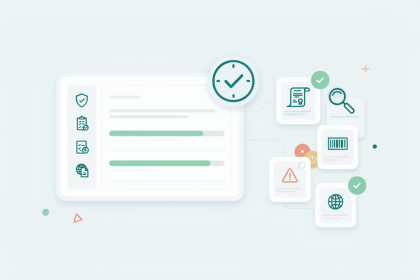
- Collect proof. Ask suppliers for certificates showing the recycled share, its post-consumer origin and where the waste was collected. Recycled plastic from outside the EU only counts if it was collected and recycled under equivalent rules.
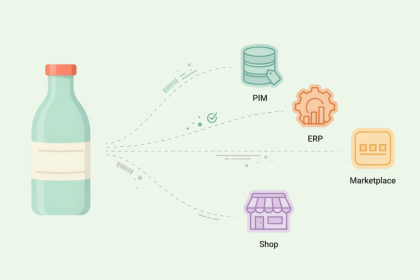
- Calculate and record. Store the recycled share for each component and roll it up per pack as a calculated attribute, so the value updates when components or suppliers change. The same data supports technical documentation, EPR reporting and any on-pack claims.
Can recycled content be advertised?
Yes, if the claim is backed by the same evidence. PPWR allows voluntary labels showing recycled content, but these must follow EU specifications once they are adopted. Until then, general EU rules on environmental claims apply, so claims must be specific and verifiable.