


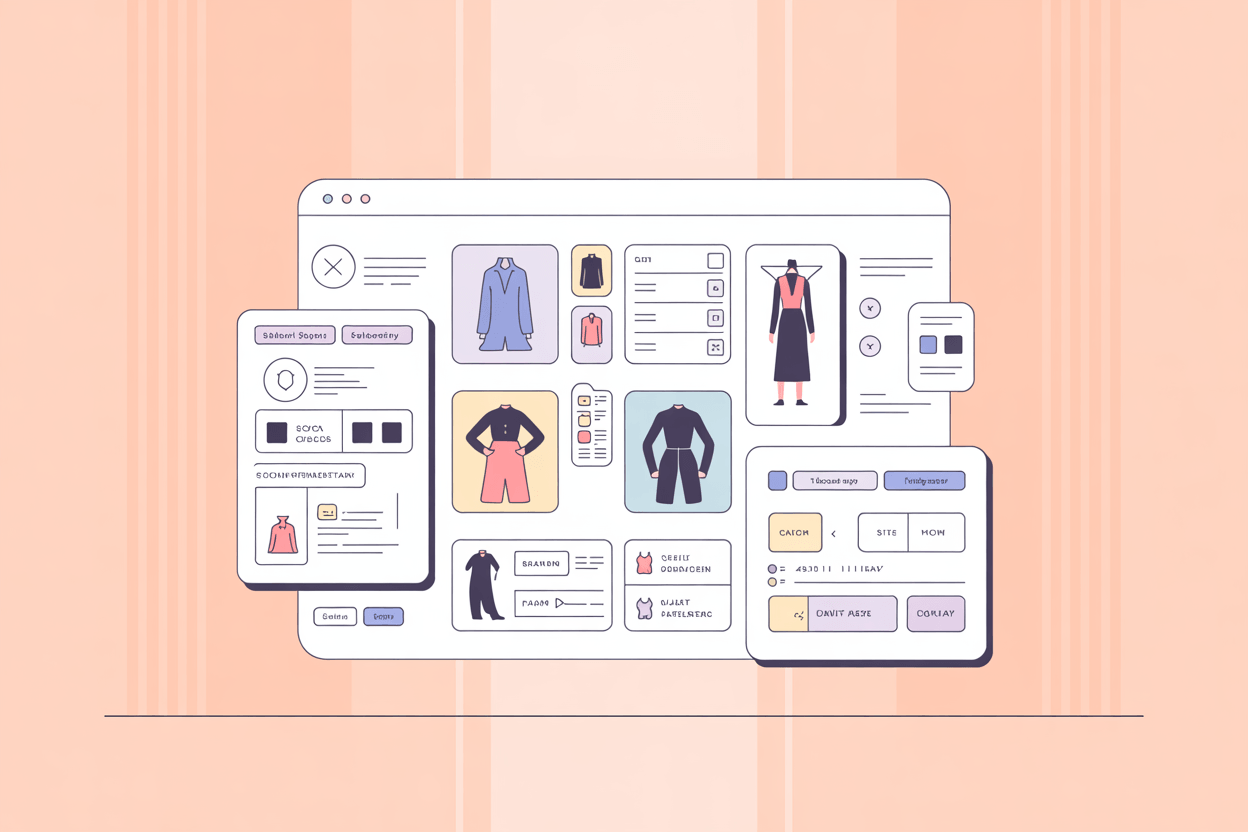
Fashion product data is structurally different from almost any other industry. A single jacket isn't one product. It's a matrix of sizes, colors, materials, and fits, each with its own SKU, images, care instructions, and often a channel-specific description. Multiply that across a seasonal collection of 300 styles, add wholesale, DTC, and marketplace channels, and you have a data management problem that spreadsheets can't solve.
This is exactly where PIM, product information management, becomes operational infrastructure rather than a nice-to-have. Fashion PIM software gives apparel and accessories brands the tools to centralize, enrich, and distribute product data consistently across all sales channels.
Why Fashion Product Data Is a Different Problem
Variant volume is the most immediate issue. A mid-size apparel brand might carry 5,000 to 15,000 active SKUs at any given time. Each variant needs correct attributes on every channel it appears on: size, color code, fabric composition, wash instructions, country of origin, fit type, and season. One wrong value in a size chart or a missing material field can trigger a return. Apparel return rates run between 20% and 30%, with fit and expectation mismatches as the leading causes, and incomplete product data is a direct contributor to both.
Seasonality creates a second operational pressure. Fashion and apparel brands live on collection cycles: Spring/Summer, Fall/Winter, Pre-Fall, Resort, and capsule drops. Each cycle requires activating new products, retiring old ones, and updating carryover styles simultaneously across every system, from the ERP to the webshop to the B2B portal used by wholesale buyers. The window to do that is short, and the cost of delays is real.
Channel diversity compounds everything. What a brand publishes on its own webshop differs from what goes to Zalando, to a department store's EDI system, or to a wholesale catalog. Each channel has its own data format, its own required fields, and its own image specifications. Without a single source of truth, teams spend their time manually adapting and reformatting data rather than enriching it. That's the core operational cost that fashion PIM software is designed to eliminate.
"A lot of brands try to manage all their product information manually, and with e-commerce channels growing so rapidly, it's just not feasible to avoid mistakes that way." — Josh Wayne, VP of Commerce Products at TrueCommerce (source: Shopify)
What Fashion PIM Software Actually Does
A PIM system is a central repository where all product data lives and is maintained before it goes anywhere else. The system most often confused with it is the ERP, but ERP manages operational transactions: inventory, orders, pricing, and finance. PIM manages product truth: the descriptions, attributes, images, variants, and channel-specific content that define how a product appears to buyers and customers. The two connect, but they serve different purposes.
PIM also differs from PLM (product lifecycle management), which handles design and development upstream. PLM gets a style to market-ready. PIM takes over from there, preparing and distributing product content across every sales touchpoint.
In fashion, a well-configured PIM system handles:
- Variant and attribute management.
One parent product with child variants. Size runs, color options, and material breakdowns are all structured consistently across the product catalog. When a care label changes, it updates once and propagates to every SKU inheriting it. - Omnichannel publishing.
The same base product data is adapted and exported in the right format for each channel, without duplicating the source. Your DTC store, marketplaces, and wholesale portals all read from the same record. - Collection and season logic.
Products can be tagged, filtered, and managed by season or collection, making it easier to activate a new drop or retire an old one without touching every record manually. - Data enrichment workflows.
Teams enrich product data with rich copy, lifestyle imagery, size guides, and compliance documentation in a structured, channel-ready way. Without this workflow, enrichment happens ad hoc — or not at all before a channel goes live. - Translation and localization.
For international fashion brands, PIM systems manage translated product descriptions, regional size conversions, and market-specific compliance fields from one place.
In projects we have implemented for apparel brands, a recurring problem before PIM adoption was the multi-sheet Excel workflow, where every channel had its own file, maintained by a different team. When a fabric changed or a style was discontinued, updates had to be made in five separate places. They never were, at least not consistently. Returns from mismatched product descriptions were a regular source of customer complaints and avoidable ops costs.
The Variant Matrix Problem in Fashion Catalogs
Fashion is particularly sensitive to how variant data is structured. Most generic product data systems treat every SKU as a separate item. That works for electronics or hardware. It doesn't work for clothing and accessories.
A PIM system built for fashion uses a parent-child model. The parent holds the shared attributes: style name, brand, category, fabric, and care label. The child variants inherit those attributes and add the unique ones: size, color code, EAN/GTIN, stock unit, and specific imagery. This keeps data consistent at the style level while allowing precise control at the SKU level.
Consider a mid-range outerwear brand managing 80 styles per season, each in 5 colorways and 8 sizes. That's 3,200 SKUs per collection, all needing correct, channel-specific data before launch. Without a structured variant model in a PIM, that workload falls on manual spreadsheet management. Spreadsheet workflows break down rapidly once SKU volumes exceed 10,000 products, and a mismatch in size or material on one channel creates downstream problems: wrong search filter results, failed compliance checks, customer confusion, and returns.
This is the variant matrix problem, and it's why fashion brands need a PIM configured around the way apparel data actually works, not a generic product catalog tool that treats a size-run as a technical edge case.
Omnichannel Publishing Without the Manual Work
Each sales channel in fashion has genuinely different data requirements, and that's what makes the problem harder than it looks.
A DTC webshop needs rich copy, lifestyle images, and detailed fit notes. A wholesale portal needs technical specs, order minimums, and delivery windows. A marketplace like Amazon or Zalando has strict taxonomies and required attribute fields that differ by category. A physical retail partner's ERP system needs flat file imports in a specific format.
Without a PIM, every new channel launch means a manual data export, transformation, and mapping exercise. With fashion PIM software, channel-specific output templates handle that automatically. The team enriches the product data once, in one place, and publishes to any channel on demand.
Channel-specific publishing is one of the highest-ROI capabilities in a fashion PIM. Brands that automate this eliminate an entire category of error.
One fashion accessories manufacturer our team worked with was sending product catalog data to 12 retail partners by email, each in a different Excel template. The team responsible spent roughly 30% of their working hours on formatting and reformatting alone. After implementing AtroPIM with automated omnichannel publishing, that time dropped to near zero. The same team redirected those hours toward product data enrichment, which improved conversion rates on partner platforms within one season.
Seasonal Workflows, Collection Management, and Time to Market
Fashion moves on a calendar. A PIM system that doesn't support collection and season logic creates friction throughout the product lifecycle and directly slows time to market.
A fashion PIM needs to assign products to collections and seasons at creation, clone and update carryover styles without duplicating work, archive retired products cleanly without losing historical data, and validate upcoming collection data before it goes live across channels.
Speed to market is the commercial outcome. A fashion or apparel brand that can activate a new collection across all channels on the same day has a real operational advantage over one where each channel team manually receives and uploads new product data. The margin implications are concrete: the industry average full-price sell-through rate sits at 60–70%, and delayed launches compress that window further. Products that miss their opening weeks sell at markdown, not at full price — and each markdown erodes the margin that covers production, logistics, and marketing costs.
What to Look for in PIM Software for Fashion Brands
Not every PIM handles fashion use cases out of the box. Generic systems often require heavy customization to support variant matrices, style hierarchies, seasonal workflows, and the attribute sets that apparel and accessories products need.
Key capabilities to evaluate in a fashion PIM:
- Native support for parent-child product structures with variant matrices
- Flexible attribute management, including size-specific and color-specific fields
- Workflow support for seasonal launches and collection archiving
- Omnichannel publishing with channel-specific output templates and field mapping
- Integration with ERP, PLM, DAM, and e-commerce platforms
- Data completeness dashboards and validation rules to catch gaps before publishing
- Localization support for multilingual and multi-market operations
ERP integration matters more than it might seem. A fashion PIM that doesn't connect cleanly to your ERP creates a synchronization problem. Stock availability, pricing, and product status changes need to flow in both directions without manual intervention.
On the deployment side, fashion brands typically choose between SaaS PIM and open-source PIM. SaaS systems are faster to deploy and lower in upfront cost, which suits mid-size brands without large technical teams. Open-source PIM, like AtroPIM, gives larger or more complex operations full control over data models, integrations, and workflows, useful when a brand's product structure or channel mix doesn't fit a standard template.
It's also worth asking how a PIM handles the EU Digital Product Passport (DPP). Under the Ecodesign for Sustainable Products Regulation (ESPR), textiles and apparel are a first-wave priority, with the delegated act for fashion expected to be finalized in late 2027 and an 18-month compliance window following. That puts mandatory DPPs on new garments sold in the EU at roughly mid-2028. The DPP requires brands to publish structured, verified data on material composition, supply chain origin, and end-of-life handling for every SKU. Brands that haven't centralized that data in a PIM will struggle to meet the requirement at scale. For brands selling into Europe, DPP readiness is a system architecture decision to make now, not in 2027.
Product Data Quality: The Problem That Doesn't Fix Itself
A fashion PIM is only as useful as the data inside it. Apparel brands often discover, after implementing PIM software, that the data quality issues they had in spreadsheets don't disappear automatically. They become more visible.
A PIM with validation rules flags missing attributes, inconsistent values, and incomplete translations before they reach any channel. That's far better than discovering the problem after a product has been live on a marketplace for two weeks with a broken size filter.
Analysis across more than 5 million SKUs from 50+ global fashion brands found that even well-managed product catalogs consistently underperform on occasion, tagging, aesthetic descriptors, and relational attributes. These gaps affect product discoverability and conversion rates, not just internal data quality scores. A jacket that doesn't have occasion or fit type attributes simply won't surface in the searches where it would sell.
Building completeness governance into PIM workflows, with mandatory fields, validation rules, and completeness scores per product family, is what separates fashion brands that use a PIM as a filing system from those that use it as a commercial asset.
Frequently Asked Questions
What is a fashion PIM? A fashion PIM (product information management) system is a centralized platform for storing, enriching, and distributing product data across all sales channels. It's designed to handle the specific complexity of apparel data: variant matrices, size runs, colorways, seasonal collections, and channel-specific attribute requirements.
How is fashion PIM different from a general PIM? Generic PIM systems often treat each SKU as a standalone product. Fashion PIM software uses a parent-child structure that reflects how apparel is actually organized: one style, multiple colorways, multiple sizes. It also includes seasonal workflow logic, collection management, and fashion-specific attribute sets that general systems require heavy customization to replicate.
When should a fashion brand invest in a PIM? The point where spreadsheets break down varies, but most apparel brands hit it around 5,000 to 10,000 active SKUs, two or more active sales channels, or the first international market expansion. At that point, the cost of manual data management — in errors, delays, and returns — exceeds the cost of a PIM system.
AtroPIM is a flexible, open-source PIM system that supports complex product structures, variant matrices, and omnichannel publishing. It's used by fashion and apparel brands to centralize product data and reduce the manual work of channel management. Learn more at atropim.com.