What is Product Lifecycle Management?
Product Lifecycle Management Definition
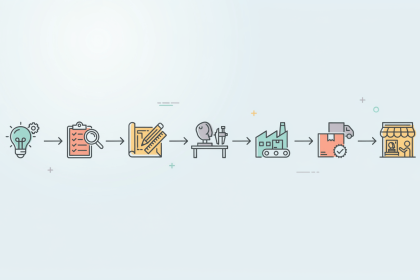
Product Lifecycle Management (PLM) is the process of managing a product from initial concept and design through to manufacturing, launch, and eventual discontinuation. It covers the full lifespan of a product, with a focus on the development and engineering phases that happen before a product reaches the market.
How is PLM different from PIM?
PLM and PIM are frequently confused because both deal with product data, but they operate at different stages. PLM manages the creation of a product: specifications, materials, design files, compliance documentation, and manufacturing details. PIM takes over once a product is ready to sell, managing the commercial information needed to list, distribute, and market it across channels.
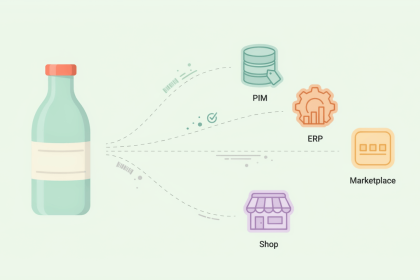
In practice, PLM is the upstream source: product data often flows from a PLM system into a PIM as a product moves from development into commerce.
Related Articles
Product information management in e-commerce: how PIM software fixes data gaps, feeds AI shopping agents, and prepares for EU product passports.
Your product description can read well and still miss the details buyers and AI assistants look for. What to include and how to keep it accurate.
EU product compliance solutions explained: GPSR, EmpCo, PPWR, ESPR and EUDR data duties, and how PIM keeps listings and ERP data audit-ready.
How to prepare a sales team for a new product launch: messaging, pricing, CRM, territories, SPIFs, scenario training, and product data.
PPWR legislation now applies. See which packaging data PIM, ERP, shops, and marketplaces need, where it breaks, and how to fix it.
How the stage-gate process for new product development works in 2026: Agile hybrids, AI at the gates, Digital Product Passport data and PIM.
The new product development process for physical products in 2026: each stage, the EU data rules that affect it, and where PIM software fits.
Stages of new product development for physical products in 2026: idea to launch, plus DPP, PPWR, green claims, tariffs and product data risks.