
Bulk Editing Definition
Bulk editing (also called mass editing or mass update) is the process of changing the same information across many records at once, instead of editing each record one by one. In product data management, it lets teams update hundreds or thousands of products in a single action, such as changing prices, reassigning categories, or correcting a material name.
What can be changed with bulk editing?
Almost any field that several products share can be edited in bulk. Common examples include:
- Attribute values, such as color, material, or warranty period
- Prices, raised or lowered by a fixed amount or a percentage
- Category assignments, such as moving products to a new section of the catalog
- Product status, such as active, discontinued, or ready for review
- Sales channels a product is published to, such as a webshop or marketplace
Where does bulk editing of product data happen?
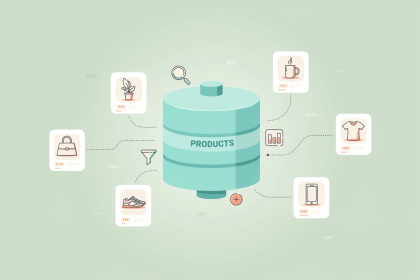
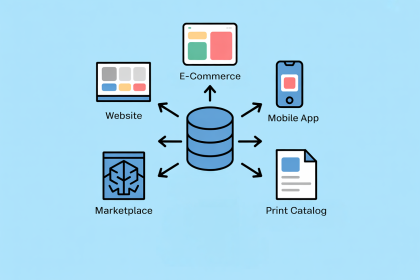
Bulk edits can be made in spreadsheets, ecommerce platforms, or ERP systems, but product data is commonly edited in bulk in a Product Information Management (PIM) system. Because a PIM system stores all product information in one central place, a change is made once and then passed on to every connected channel, including the online store, marketplaces, and print catalogs.
How does bulk editing work?
The user selects a group of products, usually by filtering by brand, supplier, or category, then defines the change and applies it to all selected records at once. The change can be entered directly in the system, made in a spreadsheet that is exported and re-imported, or set up as a rule that updates every product that meets a condition.
What are the risks of bulk editing?
A single mistake is repeated across every selected record, so a wrong filter or value can overwrite correct data on thousands of products. Common safeguards include:
- Testing the change on a small sample first
- Limiting who has permission to run bulk changes
- Using data validation rules to block values in the wrong format
- Keeping a change history so earlier values can be restored