
What is ERP?
ERP Definition
Enterprise Resource Planning (ERP) is a category of business software that manages core operational processes (inventory, purchasing, finance, and order management) in a single integrated system.
How does ERP relate to PIM?
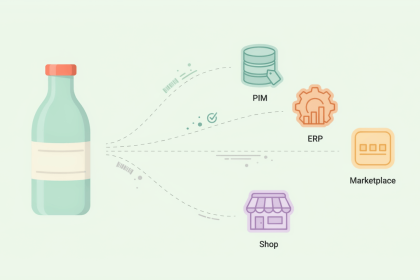
ERP and PIM solve different problems. An ERP tracks operational data: stock levels, purchase orders, supplier costs, and fulfilment status. A PIM manages the content needed to sell a product: descriptions, images, attributes, and channel-specific data. In practice, the two are integrated, pricing and inventory flow in from the ERP, while the PIM handles everything a customer or retailer sees.
Why can't businesses just use their ERP for product content?
ERPs are built for transactional accuracy, not content management. They can store a product name and a price, but they are poorly suited to multilingual descriptions, image libraries, or the varying attribute requirements of different sales channels. That gap is what a PIM is designed to fill.
Related Articles
How PIM workflow management works: stages, approval chains, data governance, audit trails, and what to look for in a system for complex catalogs.
PIM for fashion brands explained: how to manage product data across collections, sizes, colors, and sales channels without spreadsheet chaos.
Product content management system explained: what it is, how it works, key features, and how to choose the right platform for your business.
Product data governance for manufacturers and distributors: practical framework, roles, validation, and how PIM enforces it at scale
Product data management software explained: what PDM is, how it differs from PIM and PLM, key features, and which tools engineers actually use.
Product data migration explained: what the process involves, where projects fail, how to prepare your data, and what tools actually help.
Product database management for growing catalogs: right structure, governance, attribute logic, and when to move beyond spreadsheets.
Product catalog explained: formats, data quality costs, taxonomy, enrichment, and how to choose the right tools as your product range grows.