CMS Definition
A Content Management System (CMS) is software that lets people create, edit, organize, and publish digital content, such as web pages, blog posts, and images, without writing code. Editors work in a simple interface, and the CMS takes care of storing the content and displaying it on the website. Marketing teams, editors, and web teams use a CMS to keep a website up to date without relying on developers for every change.
What does a CMS manage?
A CMS typically handles:
- Pages and articles, such as landing pages, blog posts, news, and help content
- Media files, such as images, videos, and downloadable documents placed on pages
- Site structure, including menus, navigation, and links between pages
- SEO settings, such as page titles, web addresses (URLs), and meta descriptions (the short summaries shown in search results)
- Users and permissions, controlling who can write, edit, approve, or publish content
How does a CMS work?
A CMS keeps content separate from design. Content is stored in a database, while templates define how it looks. When someone visits a page, the CMS combines the two and delivers the finished page. This means editors can change text without touching the layout, and designers can change the layout without rewriting the content.
In a traditional CMS, content and the website's front end (the part visitors see) are part of one system. A headless CMS only stores and manages content and sends it through an API (a standard way for software systems to exchange data) to any front end, such as a website, a mobile app, or an in-store screen. The same approach applied to online stores is known as headless commerce.
How is a CMS different from a PIM?
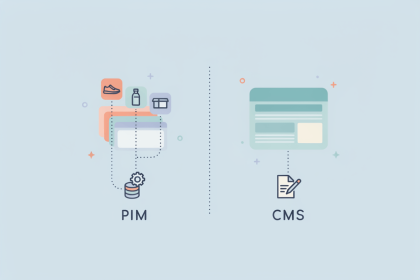
A CMS manages editorial content and how pages look. A Product Information Management (PIM) system manages structured product data, such as dimensions, materials, and technical specifications, along with variants, translations, and channel-specific versions of product content. A CMS is built for pages that are written and edited one at a time. A PIM is built for thousands of products that share the same set of fields and must stay consistent across many sales channels.
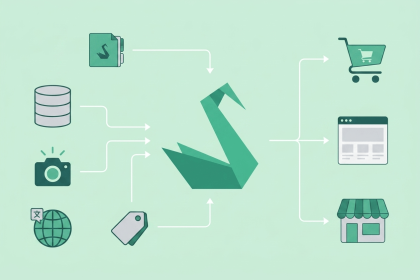
The two often work together. The PIM supplies product data to the online store, marketplaces, and the CMS, while the CMS handles the content around it, such as buying guides, brand stories, and campaign pages. Many ecommerce platforms include basic CMS features, but these are usually designed for managing pages, not large volumes of product data.