
Product Hierarchy Definition
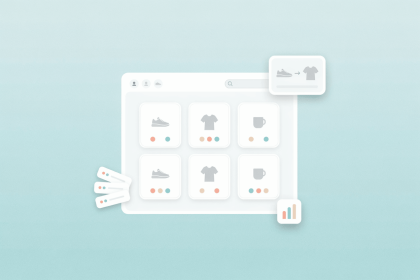
A product hierarchy is a structured way of organizing products into levels, from broad groupings at the top down to individual sellable items at the bottom. It shows how each product relates to the others and where it belongs within a company's overall range.
What does a product hierarchy look like?
A typical hierarchy moves from general to specific. A sportswear company, for example, might organize its range like this:
- Division: Footwear
- Category: Running Shoes
- Product line: Trail Running
- Product (model): TrailRunner 5
- Variant (SKU): TrailRunner 5, Blue, Size 42
Each level inherits context from the level above it. Everyone in the business then knows that a specific blue size 42 shoe belongs to the TrailRunner 5 model, the trail running line, and the footwear division.
The number of levels and their names vary by company and industry. A hardware distributor might use only three levels, while a large retailer might use six or more.
How is a product hierarchy different from a category tree?
The two are related but serve different purposes. A product hierarchy reflects how a business internally organizes, plans, and manages its range, often based on brands, lines, and models. A category tree reflects how customers browse a webshop or catalog. The same product sits in one place in the hierarchy but can appear in several categories online, such as "Running Shoes" and "Sale."
Why does a product hierarchy matter?
Without a clear hierarchy, product data turns into a flat list of thousands of unrelated items. A defined structure helps in several practical ways:
- Reporting: sales, margins, and stock can be analysed by division, line, or model instead of item by item
- Data maintenance: shared information, such as a model's description or material, is entered once at a higher level and applied to every variant below it
- Range planning: gaps and overlaps in the assortment become easier to spot
- Consistency: product, marketing, and sales teams all work from the same structure
How is a product hierarchy managed?
Smaller businesses often keep their hierarchy in spreadsheets or in their ERP system. As the range grows and products are sold across more channels, this becomes difficult to maintain. In a Product Information Management (PIM) system, the hierarchy is built into the data model: parent products hold shared attributes, variants hold only what makes them different, and changes made at a higher level flow down automatically. This keeps product data consistent from the top of the structure to every individual SKU.