
Category Tree Definition
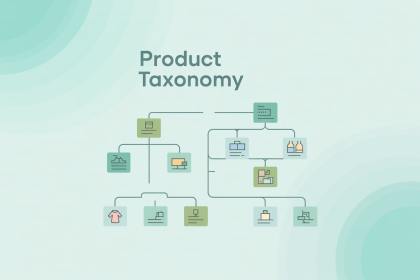
A Category Tree is a hierarchical structure that organizes products into nested groups, from broad categories down to specific subcategories, so they can be browsed, filtered, and managed consistently across systems.
The name comes from the shape: a single trunk (the top-level catalog) that branches into categories, then subcategories, until it reaches individual products at the tips.
What does a category tree look like?
A simple example for an industrial equipment manufacturer:
- Machinery
- Pumps
- Centrifugal Pumps
- Submersible Pumps
- Compressors
- Air Compressors
- Gas Compressors
A product sits at the end of a branch. An industrial air compressor lives under Machinery → Compressors → Air Compressors.
Why does it matter for ecommerce?
The category tree shapes two things at once: how shoppers navigate a site, and how internal teams manage product data. A well-structured tree makes it easier for customers to find what they need and easier for a PIM to apply the right attributes, filters, and pricing rules to the right products. A poorly structured tree creates problems in both directions.
How does it relate to taxonomy?
Taxonomy is the broader system of rules for how products are classified. The category tree is one expression of that taxonomy: the navigable structure customers and systems interact with. A business may maintain one taxonomy but present it differently across channels, with the category tree adapting to each storefront or marketplace.