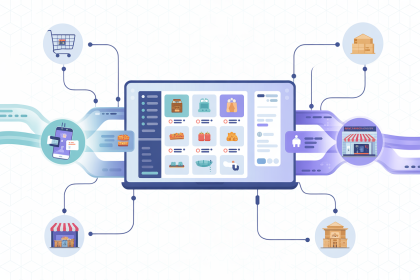

Social Commerce Definition
Social commerce is the buying and selling of products directly within social media platforms, such as Instagram, Facebook, TikTok, or Pinterest. Customers discover a product, view its details, and complete the purchase without leaving the app.
How is it different from social media marketing?
In social media marketing, a post or ad is used to attract attention and send people to a separate online store, where the purchase happens. In social commerce, the social platform itself becomes the store. Removing the step of switching to another website shortens the path from interest to purchase, which is especially important on mobile devices.
What forms does social commerce take?
- In-app shops: a brand's product catalog displayed as a storefront inside the social platform
- Shoppable posts and videos: products tagged in images or videos that users can tap to view and buy
- Livestream shopping: a host presents products in a live video while viewers buy in real time
- Creator and influencer sales: products recommended by creators, often with direct purchase links or affiliate commissions
Why does product data matter?
Each social platform relies on a product catalog that the business uploads or syncs, usually through a product feed. Every platform has its own requirements for titles, descriptions, images, categories, and identifiers, and listings with missing or incorrect data may be rejected or shown less often. Prices and stock levels also need to stay current, since a product sold out on the website but still available on social media leads to cancelled orders and frustrated customers.
Businesses selling across several social platforms alongside their webshop and marketplaces typically use feed management to adapt data for each channel and a Product Information Management (PIM) system as the central source of that data.