
B2B Commerce Definition
B2B Commerce (Business-to-Business Commerce) is the buying and selling of goods or services between businesses, rather than between a business and an individual consumer.
How is it different from regular online shopping?
In B2C (business-to-consumer) commerce, a shopper browses a catalog, picks a product, and pays a fixed price. B2B buying is more complex. Prices are typically negotiated per customer or volume tier, orders are placed in bulk, and purchases often require approval from a purchasing department before they go through. Buyers log in to see their own specific catalog, pricing, and credit terms, not a one-size-fits-all storefront.
Why is product data especially important in B2B?
When buying online, B2B buyers cannot inspect a product before purchasing. A procurement manager choosing an industrial component relies entirely on specifications, certifications, and technical documentation to make a decision. If that data is incomplete or inconsistent across channels, the sale is lost.
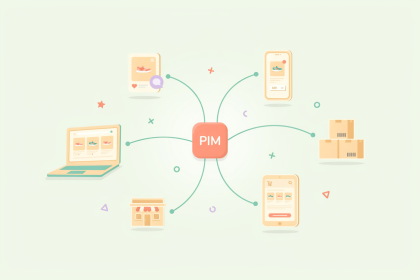
B2B catalogs also tend to be large and technically complex, with strict classification requirements using standards like eCl@ss or ETIM, and the same product data often needs to reach distributor portals, retailer catalogs, procurement platforms, and printed trade catalogs simultaneously. This is why PIM systems are widely used in B2B contexts, and why the concept of PIM itself originated largely in B2B manufacturing and distribution, rather than in consumer retail.