What is a Child Product?
Child Product Definition
A child product is a purchasable variant linked to a parent product. It represents one specific combination of attributes (a size, color, or configuration) and carries the information unique to that version: its own SKU, stock level, and sometimes its own price.
What does a child product actually look like?
If a parent product is a wool sweater, each child is a specific option a customer can buy: the navy blue in size medium, the grey in size large, and so on. On the storefront, customers see the parent page and select their preferred child by choosing attributes. The child's stock level is what determines whether that option shows as available.
What happens when a child is discontinued?
The child is deactivated rather than deleted, so historical orders tied to that SKU stay intact. If every child under a parent is discontinued, the parent is typically unpublished from the storefront too.
Related Articles
Learn how variant management software and PIM keep size, color, and spec variants accurate across every channel, plus a checklist for choosing a tool.
Inriver alternatives for PIM in 2026 compared: open source platforms, enterprise SaaS, and what to check before switching.
PIM for fashion brands explained: how to manage product data across collections, sizes, colors, and sales channels without spreadsheet chaos.
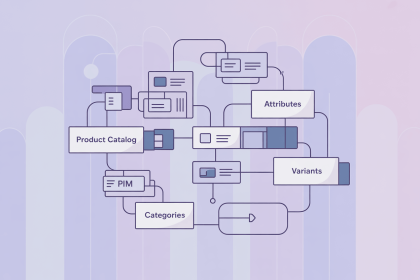
Understand the product information management data model: core entities, attribute scopes, hierarchies, and how to design one for complex catalogs.
Product hierarchy best practices for complex catalogs: structure levels, naming conventions, attribute inheritance, variants, and data governance.
PIM features explained: which capabilities matter for complex product catalogs, and how to tell capable systems from basic ones.
Discover how to structure a product hierarchy for your PIM system with product types, classifications, lines, and families to improve data quality and operational efficiency.
A PIM data structure is the foundation that determines whether your product information is an asset or a liability.