What is a Parent Product?
Parent Product Definition
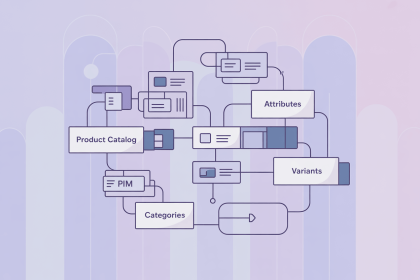
A parent product is a catalog record that groups related product variants together under one shared identity. It is not something a customer can add to a cart, but the container that holds common product information while its child products handle the purchasable specifics.
What goes on the parent?
Content that is true for every version of the product: the name, description, brand, category, and main images. If you sell a water bottle in three colors, the copy explaining what the bottle does lives on the parent. The individual color options, each with their own SKU and stock count, live on the children.
When does the parent-child structure break down?
If variants differ too much (different prices, completely different imagery, significantly different descriptions) teams sometimes split them into separate parent products instead. The parent-child model works best when variants are genuinely the same product with minor differences a customer selects at checkout.
Related Articles
Product Information Management for ecommerce now serves AI agents as well as shoppers. What changed, which risks are live, and how PIM software keeps product data accurate.
Product information management in e-commerce: how PIM software fixes data gaps, feeds AI shopping agents, and prepares for EU product passports.
Your product description can read well and still miss the details buyers and AI assistants look for. What to include and how to keep it accurate.
Learn how variant management software and PIM keep size, color, and spec variants accurate across every channel, plus a checklist for choosing a tool.
How to choose product variant management software: practical tips for suppliers, retailers, and wholesalers on parent-child data and PIM.
PIM for fashion brands explained: how to manage product data across collections, sizes, colors, and sales channels without spreadsheet chaos.
Product data feed optimization for Google Shopping, Meta, and more. Practical guide to attributes, titles, images, pricing, and ongoing feed management.
Understand the product information management data model: core entities, attribute scopes, hierarchies, and how to design one for complex catalogs.