Order Management System Definition
An Order Management System (OMS) is software that tracks and manages customer orders from the moment they are placed until they are delivered, including any returns. It brings orders from every sales channel, such as an online store, marketplaces, and physical shops, into one place, and coordinates stock, payment, shipping, and customer updates. Retailers, brands, and wholesalers that sell through several channels use an OMS so that sales, warehouse, and customer service teams all see the same order information.
What does an OMS manage?
An OMS typically handles:
- Order capture from all sales channels, so every order appears in one list no matter where it was placed
- Inventory visibility across warehouses, stores, and suppliers, so the business only sells what it can actually deliver
- Fulfillment routing, which decides where each order is picked, packed, and shipped from, for example the nearest location with stock
- Order status and customer updates, such as order confirmations, shipping notifications, and tracking links
- Returns, exchanges, and refunds, including restocking returned items
How does an OMS work?
When a customer places an order, the OMS receives it, checks that the items are in stock and the payment is approved, and assigns the order to a warehouse, store, or supplier. It then sends picking and shipping instructions, tracks the shipment, and keeps the customer informed. Each sale updates the available stock, and the OMS passes that information back to the sales channels, so a product that has sold out is no longer offered for sale.
How is an OMS different from an ERP and a PIM?
The three systems often work side by side, each responsible for different information:
- An ERP (Enterprise Resource Planning) system runs core business operations such as finance, purchasing, and inventory accounting. Many ERPs include basic order processing, but they are usually not designed to route high volumes of orders across many channels and fulfillment options.
- An OMS manages what happens to each order: where it came from, where it ships from, and what its status is.
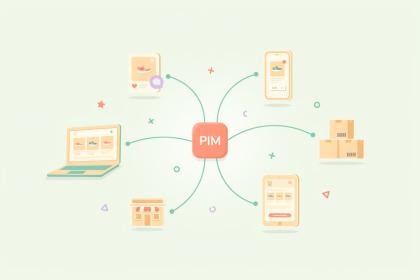
- A Product Information Management (PIM) system manages the product information customers see before they order, such as titles, descriptions, attributes, and images.
The systems depend on each other's data. The PIM supplies product details that the OMS uses, such as SKUs, names, weights, and dimensions, and the OMS sends order and stock updates to the ERP. When product data is wrong, problems show up in order handling: an incorrect weight leads to wrong shipping costs, and an inaccurate description leads to more returns that the OMS then has to process.