
Attribute Inheritance Definition
Attribute Inheritance is the mechanism by which a child product automatically receives attribute values from its parent product, without those values needing to be entered manually for each variant. It is a core feature of structured product catalogs and PIM systems that manage products with multiple variants.
How does it work?
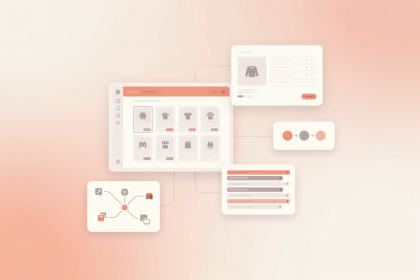
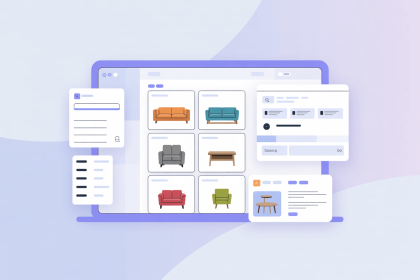
A parent product holds attributes that apply to all its variants: brand, category, description, care instructions, country of origin. Each child product inherits those shared values automatically, and only stores the attributes that differ, typically size, color, weight, or SKU.
If a shared value changes at the parent level, such as an updated description or a corrected material specification, the change propagates to all children without manual intervention.
Why does it matter?
Without inheritance, teams managing large catalogs must either duplicate data across every variant or accept inconsistency. Both create problems: duplication multiplies the effort needed to maintain accuracy, while inconsistency erodes data quality and creates conflicting information across channels. Attribute inheritance eliminates both risks by establishing a clear hierarchy where shared data lives in one place.
Where does it fit in a PIM?
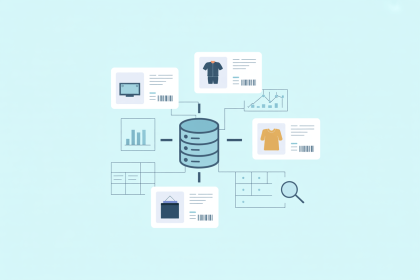
In a PIM system, attribute inheritance is typically tied to the product data model and product family structure. The family defines which attributes exist; the parent-child relationship determines which values flow down. Some systems allow inheritance to be overridden at the variant level, which is useful when one size or configuration has a legitimately different value.